


We all know, either from direct or indirect experience, what hospitals are like and what happens in them. Some are born, others die, others recover and move on... Life comes and goes through hospital corridors and rooms. A stay in a hospital is usually tough, both for patients and their families. And it's even tougher when the patients are children.
Over the years we have heard about many solidarity initiatives, born within hospitals themselves or led by associations or organizations, that contribute to making the stay of the little ones more bearable. Juegaterapia (which focuses on the benefits of play for hospitalized children) or the Theodora Foundation (which has the support of the Doctor Clowns) are great and wonderful examples of this.
But today we want to share an initiative that has particularly touched our hearts, as it involves children and ARISTODOGS. The Rey Juan Carlos University Hospital in Móstoles (Madrid) has launched a pioneering initiative to make life more pleasant for children admitted there.
From now on, Tuesday will become the most anticipated moment of the week for the little ones. From five to six, children who own ARISTODOGS will be able to meet their best friends at the health center.
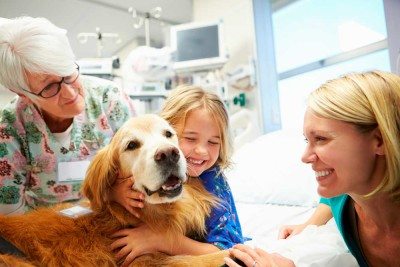
Global trends point to personalization as key to offering any product or service. It makes sense, therefore, that this should also be the case in medicine and healthcare. Since personalization is the best ally for improving hospital care. In fact, the Healthcare Humanization Plan promoted by the Community of Madrid has personalization as one of its strategic pillars.
In the case of minors, personalization is even more important. This is because for them, hospitalization is a particularly difficult, boring, and seemingly endless circumstance. Therefore, the hospital's Pediatrics department tries to mitigate this difficult experience by making them feel at home—as much as possible.
That's why they try to allow children to sleep in their own pajamas, eat "home" food (instead of typically bland hospital food), play with their toys... And from now on, they will also be able to receive visits from their dearest friends: their ARISTODOGS.
Currently, visits can only last an hour (though that's better than not seeing them at all, right?), but in the long run, it is hoped that dog visits can take place twice a week. Everything will depend on the success of the initiative, but knowing the solid, special, and beneficial relationship children have with their ARISTOPETS (which we have talked about on another occasion), it is expected to work wonderfully.
From a medical point of view (which in this case is the most important), it achieves an improvement in the children's mood, as the dog visit breaks the monotony of the days of hospitalization and becomes a strong reason to "keep going" and endure injections, IVs, syrups... and everything that children have to endure to get better with more energy. By extension, all this helps to shorten the time children spend in the hospital.
Having said all this, let's gather the keys to enjoying this initiative.
Which patients can receive a visit from their ARISTODOG in the hospital?
Hospitalized children aged between one and 15 years, as long as they are clinically stable.
Who cannot receive a visit from their ARISTODOG?
– Children undergoing any type of isolation
— Children who have respiratory problems and need oxygen
— Children who have mobility problems or difficulties
— Children who are clinically unstable
What needs to be done to request a dog visit?
Fill out an application form, available at the hospital's Information and Patient Care Service.
What ARISTODOGS can visit the hospital?
—All of them, as long as their breed is not on the list of those considered potentially dangerous (according to RD 287/2002)
—Dogs that have up-to-date mandatory vaccinations
Rules to consider
—Dogs must have been thoroughly brushed before entering the hospital, to prevent hair shedding in the premises as much as possible
—They must have relieved themselves (the reason for this is obvious)
—They must be under the care and supervision of an adult caregiver at all times
As you can see, this is a heartwarming and very positive initiative for everyone. Both for the young patients and their families (who will surely be happy to see the reunion), as well as to dignify the role of pets in our society, and also to show that healthcare is not only based on science, but above all on humanity, empathy, and affection.
