


Avant-garde movements are characterized by a provocative attitude. Everything published previously is rejected for being outdated. They sought the new, the original, challenging established models and values. What were these movements? What artists include ARISTOPETS in their works?
Expressionism (1905-1925)
Expressionism takes experiences from its inner world and must harmonize them with the impressions it receives from the outside, from nature.
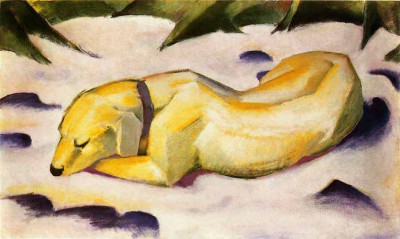
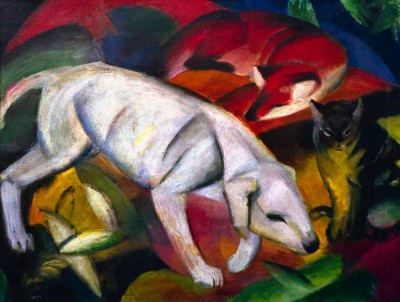
Franz Marc
This artist is fascinated by the world of animals, which are beautiful, pure, and true. He distrusts human beings, only finding the original and true in the animal world.
Cubism (1906)
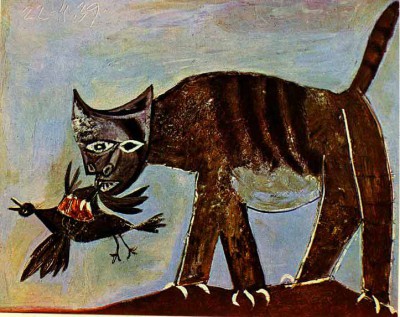
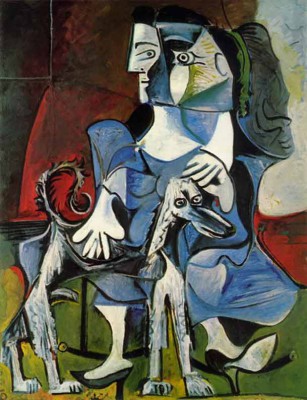
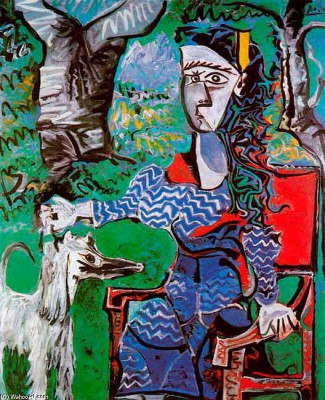
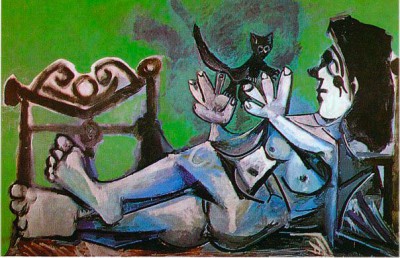
Cubism is considered one of the most modern pictorial movements. From it, a series of proposals would emerge, and its influence even reaches our days. The composition of the works is marked by geometrization. For them, color is not important. Its main representative was Pablo Picasso.
Cat with Bird (1939)
Woman with Dog (1962)
Woman with Dog under the Tree
Nude Woman with Cat (1964)
Futurism (1909)
This is a movement created by young people who sought to revolutionize artistic and creative conventions in general. It has always gone further from a theoretical point of view, as it is much easier to theorize than to execute.
Giacomo Balla
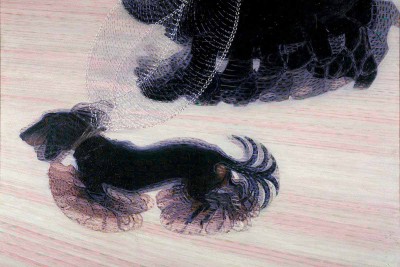
This artist works with small comma-shaped vertices that overlap each other, producing a sensation of movement. One of his most characteristic works featuring an ARISTOPET is: Dynamism of a Dog on a Leash (1912). The dog is moving, and the artist multiplies its legs, so that the viewer perceives the sensation of movement.
Realism
After the horrors of the First World War, many artists turned their gaze towards less radical, less "avant-garde" forms. This was a "return to order," with a consequent return to "new figurations."
Marc Chagall
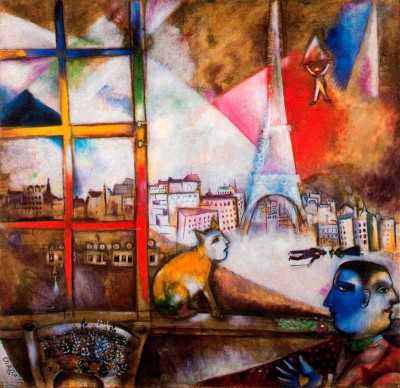
He was a master of color; his tones vibrate with different intensities, enhancing the content of his paintings. As seen in Paris Through the Window (1913)
Otto Dix
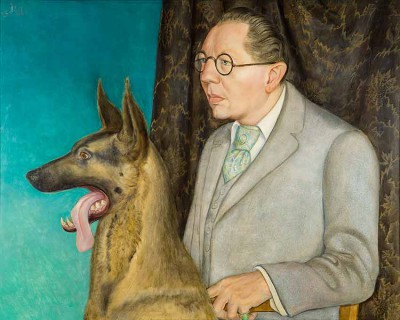
This artist chose the portrait genre to explain his idea of the world. The harshness of his themes is accentuated by his way of presenting them: cold and meticulous. Hugo Erfurth with a Dog, Ajax (1926). This gentleman symbolizes the dominant bourgeoisie with a prototype, portrayed with his dog as a symbol of fidelity.
Surrealism (1920)
Surrealism is based on the theory of the irrational linked to the unconscious, which gives rise to art through dreams, magic, mystery, and irrationality. Reason gives rise to science and irrationality to art.
Joan Miró
During his first stage, he produced quite realistic, almost naive work, connected with traditional artistic currents such as Cubism and Fauvism.
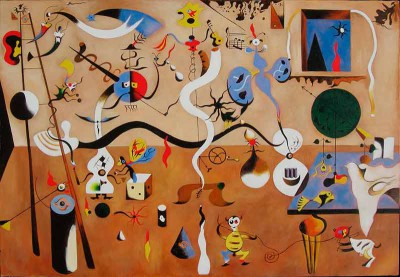
The Harlequin's Carnival (1924) A work filled with childishness and play, reminiscent of the world of imagination. In this work, we find two ARISTOCATS playing with a ball of yarn.
Frida Kahlo
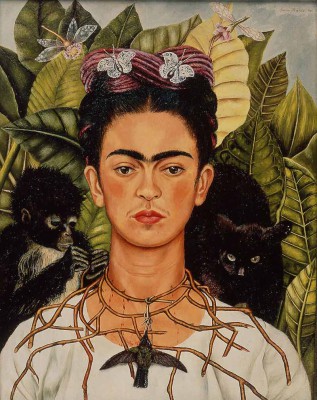
Her works have a very personal, almost autobiographical style. They show a mix of expressionist and surrealist elements and are an almost autobiographical display. Frida became the most internationally recognized Mexican artist, not only for her works but also for her personal image.
Self-Portrait with Thorn Necklace (1940)
Other avant-garde movements where we also find ARISTOPETS in their works are Impressionism, Post-Impressionism, and Fauvism.