


Owners worry about their pets being healthy and happy at home, that they have the life they deserve. Sometimes, you notice a different behavior in your cat or dog and don't know what's wrong with them.
When faced with strange behaviors, it's always a good idea to go to the vet so they can examine your pet and tell you exactly what might be happening. Additionally, having knowledge about possible disease symptoms helps you calm down and not worry so much about your pet.
Unneutered cats tend to escape from home in search of a mate. Many female cats leave home for a few days and then return pregnant. Therefore, it is always advisable to spay your feline to avoid health problems and pregnancies. Spaying should "be done at a certain age, when the female cat has already developed," advises María Martínez, a registered veterinarian specializing in behavioral medicine at Clínica Malasaña.
If your female cat has left home, you may not notice any strange symptoms or changes in her body, but if your feline is not spayed, it is likely that she has become pregnant after escaping.

What symptoms indicate that your cat is pregnant?
At ARISTOPET, we spoke with María Martínez, a registered veterinarian specializing in behavioral medicine at Clínica Malasaña, to explain what the main symptoms that help you detect that your cat is pregnant might be.
First, it's important to know that the gestation period will last approximately 9 to 10 weeks. Therefore, it varies greatly depending on the stage she is in.
Some of the possible symptoms that can help you know if your cat is pregnant are:
- Weight gain: if you notice your cat is very heavy and eating a lot, you need to be careful. "A possible mistake is to think she is gaining weight because she eats a lot, but in many cases, if she has recently been in heat and is not spayed, it could be because she is pregnant," María details.
- Bulging belly: it could start to be noticeable from the fourth week.
- Swelling in the mammary glands and pinker nipples: This is usually the most common symptom and the one owners usually notice.
- Nausea: she might vomit.
Regarding behavioral changes, she highlighted that pregnancy does not affect all female cats equally, but some behavioral changes could be:
- Loss of appetite: In many cases, hormonal changes in women cause them to lose their appetite and feel more tired.
- More affectionate: your cat may be more cuddly. The same thing happens when she is in heat. Some tend to be more cuddly and others more irritable and aloof.
- More sleepy: one of the effects may be that your cat is more tired and spends more time sleeping.
These are some of the possible symptoms a female cat can have when she is pregnant. As we mentioned earlier, not all of them have the same behaviors; there are always exceptions.
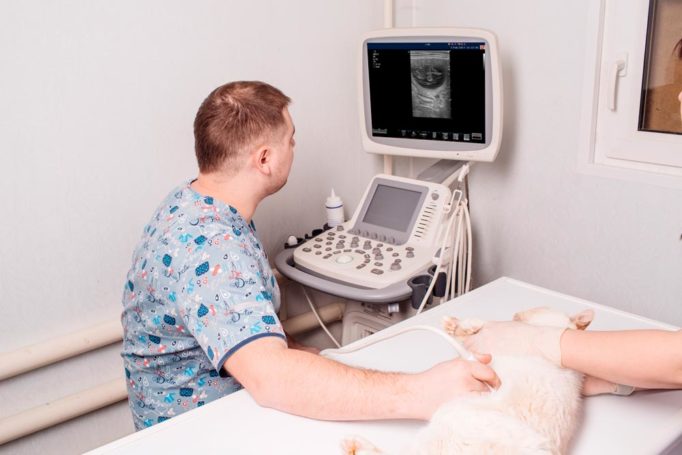
If you see any of these symptoms, go to your trusted vet so they can tell you exactly what might be happening, because she might not be pregnant, but rather something else is going on. We hope these tips help you to have more information about felines and to know how to act if you perceive any symptoms.
María Martínez, registered veterinarian specializing in behavioral medicine in Madrid
Clínica Veterinaria Malasaña
Madrid 28004