


Konrad Lorenz was an Austrian scientist who achieved widespread international recognition in the fields of Zoology and Ethology. Today we want to tell you about him because his figure marked a before and after in the understanding of the animal world. And we believe that as ARISTOPETERS, "we owe him a lot."
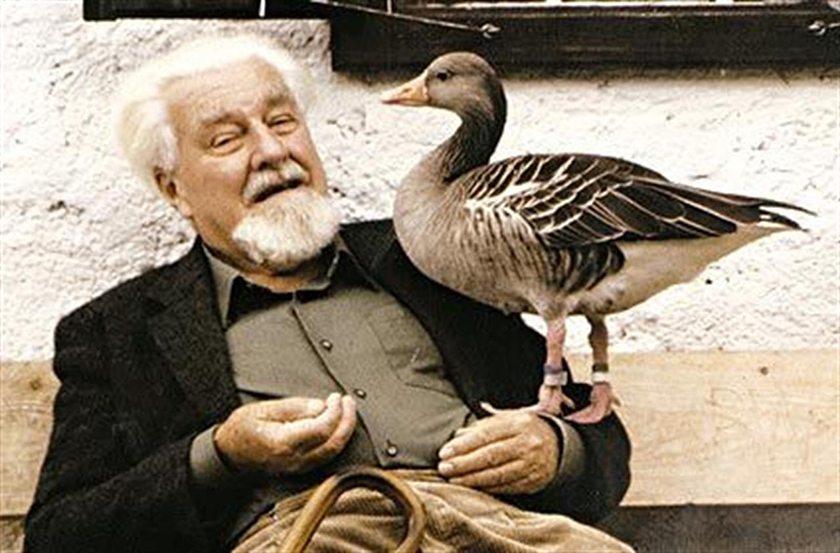
Konrad Lorenz was born in Vienna in 1903 and passed away in Altenburg in 1989. His curiosity and interest in animal behavior began at a very young age, as his home was located in a wooded area, rich in fauna, especially birds.
He completed part of his medical studies in the United States, at Columbia University. Later, at the University of Vienna, he graduated in Medicine in 1928 and in Zoology in 1933 (this detail is important, it shows us how far ahead other societies were. Zoology studies in Spain in the 1930s...?)
His interests focused mainly on the study of learning processes in birds, especially wild geese. After years of observation and study, he discovered a critical stage in which chicks learn to recognize and follow their parents, even if they are adoptive, as long as certain auditory or visual stimuli (imprinting) are present, which triggers the young's reaction. His innovative working methods, being in direct contact with his object of study (always accompanied by his family of ducklings), made it possible to understand many patterns of animal behavior.
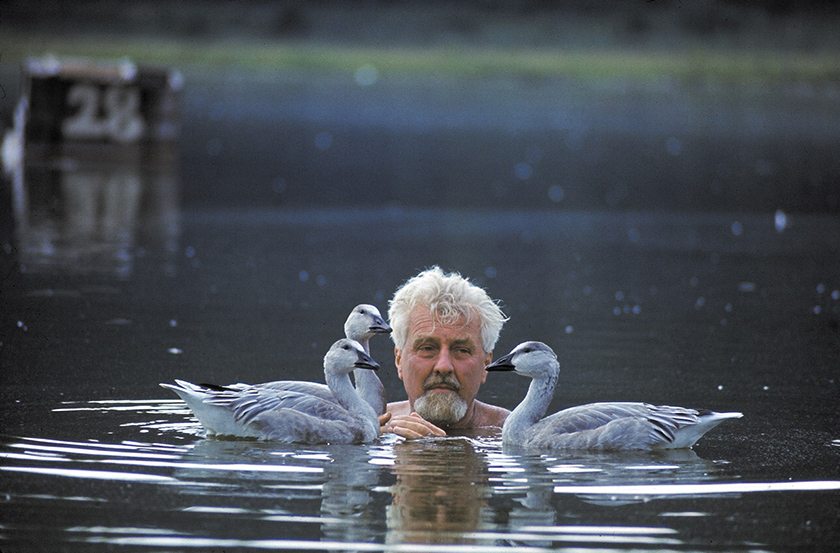
All these investigations represented a great advance in the understanding of animal behavior and the patterns of adaptation and survival of the species. So much so that they resulted in a new science: Ethology. In 1939, Lorenz, along with Nicolaas Tinbergen, a Dutch ethologist, founded the famous Ethological School of Animal Behavior.
For all his scientific and research work, and especially for his discoveries about the organization and responses of instinctive behavior, both from an individual and social point of view, he was awarded the Nobel Prize in Medicine-Physiology in 1973, which he shared with Karl von Frisch and Nicolaas Tinbergen, also zoologists. This caused some surprise in the scientific world, although the Swedish jury justified its decision by saying that his work contributed to better understanding some aspects of psychiatry.
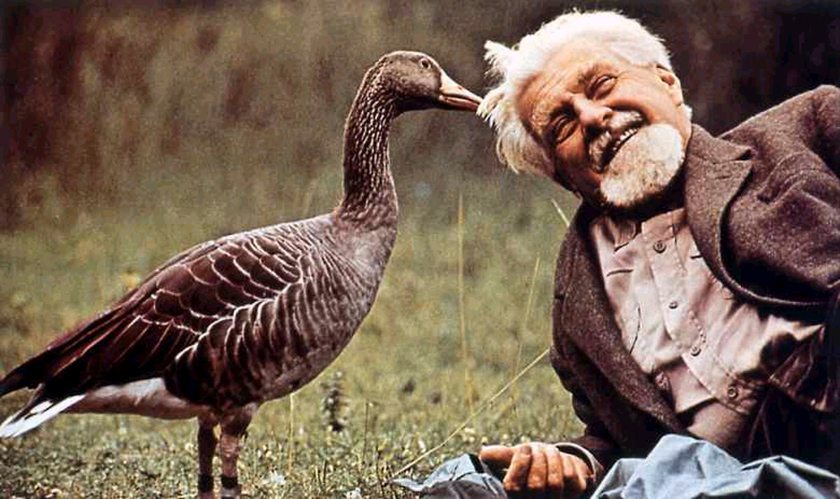
Furthermore, Lorenz was an environmental advocate and a leader in the ecological movement who knew how to appreciate the importance of natural beauty and that of human creation. He asserted that the beauty of nature and the beauty of the cultural environment created by human beings are necessary to maintain the health of the human soul and spirit.
The figure and work of Konrad Lorenz have inspired several generations of scientists around the world. His universal knowledge, innovative genius, interest, and rigorous research served as a model for many academic institutions to organize the processes of building transversal and interdisciplinary knowledge.
In this interesting documentary, you can delve deeper into Lorenz's science and better understand why he was a revolutionary figure in this field:
If you want to know about other relevant figures in the field of animal knowledge, whom we have already discussed in ARISTOPET, click here. And if you think this post might be interesting for your friends, share it!