


Which ARISTODOG breeds are the most sociable?
Those of us who live with an ARISTODOG tend to think that ours is the cutest, smartest, nicest, most sociable... But that's not the case. At least not according to science. Specifically, according to a recent study published in Science, which suggests that the personality of our ARISTODOGS may be factory-made.
According to scientists from Princeton University (USA) who carried out the research, dogs are social and sociable by nature. This is not due to an increase in their social cognition, but to a genetic mutation related to Williams-Beuren syndrome: a human developmental disorder with symptoms such as hypersociability, which affects one in 7,500 newborns in Spain.
The study, led by Bridgett Von Holdt, focused on the chromosomal area involved in canine sociability, and analyzed the behavior and DNA of several dog breeds from the American Kennel Club. The breeds present were Alaskan Malamute, Bernese Mountain Dog, Border Collie, Boxer, Basenji, Cairn Terrier, Golden Retriever, Great Pyrenees, Jack Russell Terrier, Saluki, Pug, Miniature Poodle, and Miniature Schnauzer.
We already knew that loneliness and isolation cause behavioral problems in dogs, such as aggression or the inability to relate to other dogs or people. In fact, it is recommended that dogs be integrated into the family group and have daily contact with people and other animals.

However, this new study suggests that dogs have a genetic condition that can lead to an exaggerated motivation to seek social contact compared to wolves. The results indicate that the GTF2I and GTF2IRD1 genes are connected with hypersociability in dogs, and that this is not due to an advanced form of social cognition developed as a result of their domestication, as had been believed until now. Monique Udell, a scientist at Oregon State University (USA) and co-lead author of the study, assures that these findings "provide a new understanding of the behavioral divergence between dogs and wolves."
In the study, researchers evaluated the sociability of 18 domestic dogs of different breeds and 10 captive gray wolves from different continents using two problem-solving tasks.
The first consisted of opening a box with a sausage inside within two minutes and with a human present. The results showed that dogs were more likely to abandon the task to look at the person, while wolves tended to persist and solve it, even with someone nearby.
In the second test, something similar happened: a person sat within a circle, and two tests were carried out. In the first (active phase), the person called the animal by name and encouraged contact. While in the second (passive phase), they sat in silence and ignored it. The result: both dogs and wolves rushed to approach people. However, wolves tended to move away after a few seconds, while dogs persisted in trying to get the attention of individuals, both familiar and unfamiliar.
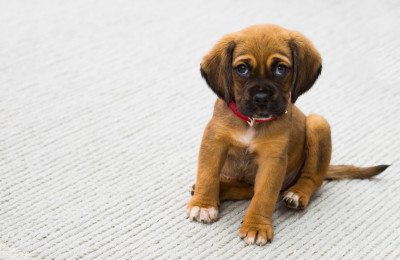
According to this study, the most sociable ARISTODOGS and carriers of the genetic mutation turned out to be: Bernese Mountain Dog, Border Collie, Boxer, Golden Retriever, Jack Russell Terrier, Miniature Poodle, and Pug. In contrast, Alaskan Malamutes, Basenjis, Cairn Terriers, Great Pyrenees, Miniature Schnauzers, Salukis, and semi-domesticated dogs did not seek human attention. These are interesting results that many ARISTOPARENTS of supposedly less sociable breeds will surely disagree with...
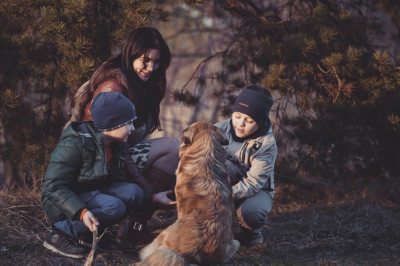
In any case, the relevance of this research lies in that it is the first to integrate behavioral and genetic data to understand the molecular foundations of the changes that occurred in the social behavior of dogs during domestication. However, it should not be forgotten that the analysis is based on a few animal samples, and although the identified genes are good candidates to explain hypersociability, a larger and more diverse group would need to be investigated to confirm the results.
If you want to read other studies that we have covered at ARISTOPET, click here.