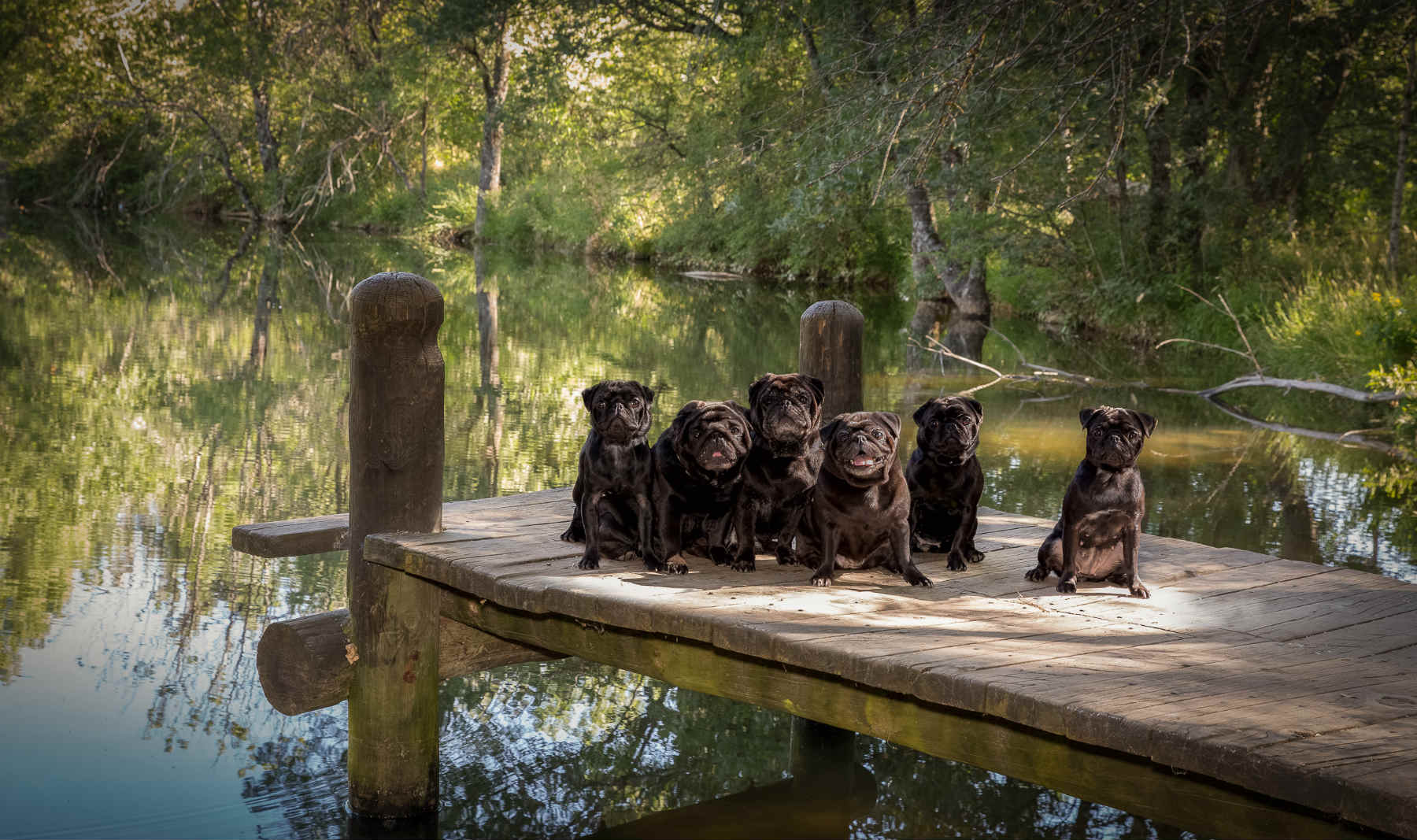
Pugs, also known as pugs in English and mops in German, belong to a breed that, according to certain conjectures, originated in the East, specifically China, where dogs with upturned noses enjoyed a series of privileges exclusive to the nobility (the reason is unknown). Pugs arrived in Europe with traders from the "Dutch East India Company" and by the 16th century, they were highly admired in the Netherlands. In fact, pugs began to be the monarchical symbol par excellence. From the Netherlands, pugs made the leap to England with the ascension of William III to the throne. Until 1877, the breed was only seen in fawn color, but that year, a black pair arrived from the East.
Today, we can say that pugs are one of the most beloved, popular, and amusing small dog breeds. In cinema, pugs have experienced moments of glory, thanks to Frank, the pug from Men in Black, whom we already discussed in this post. But also thanks to Percy, Governor Ratcliffe's spoiled little dog who arrives in the New World in Pocahontas. Not to mention the endless social media profiles of famous pugs, among which Doug the Pug stands out with 2.6 million followers.
What are pugs like?
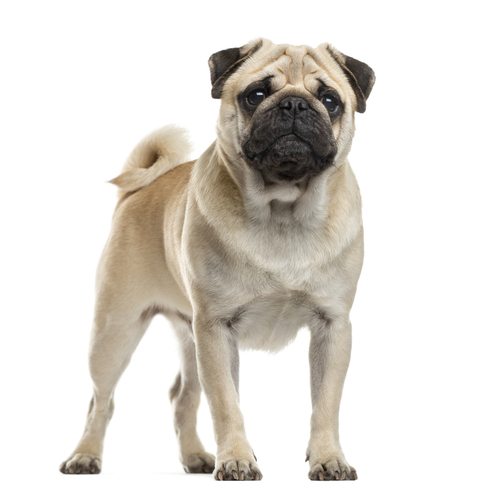
Pugs are undoubtedly square and plump dogs. As they say, "multum in parvo," meaning a lot of substance in a small space. However, they are compact dogs, quite well-proportioned. Their tail is quite mythical, tight and curled over the hip. Their weight ranges between 6.3 and 8.1 kg.
Their face is one of their most representative features, especially those well-defined wrinkles that give them remarkable expressiveness. Their short, obtuse, and upturned muzzle, along with their black nose and large, open nostrils, contribute to their memorable face.
Their ears are thin, small, and soft, like velvet. Depending on the dog, they can have "rose ears," which are small, drooping, and folded back to expose the ear canal. Or "button ears," which fold forward with the tip adhering to the skull to cover the opening.
As for their gaze, we can say it is expressive, and it conveys both sweetness and a certain concern... which is irresistible. Their eyes are very bright, and when they get excited, they seem to burn.
Their fur, as those who have petted them know, is fine, smooth, soft, short, and shiny. The shades range from silver, apricot, light fawn, to black. As we said, light-colored pugs used to be more popular, but today we see them in all their splendor, sporting coats of very varied tones.
What is the personality of pugs like?
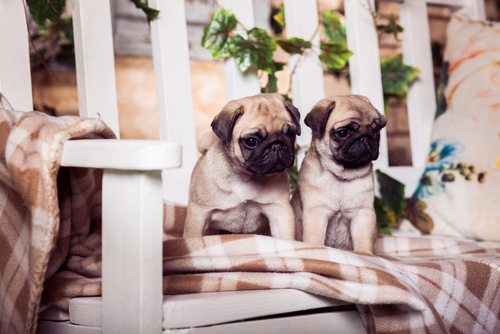
Pugs are charming. Anyone who has interacted with them closely knows it. They have a great dignity, seemingly disproportionate for their small size, which undoubtedly makes them appear even more amusing and irresistible. They are also very intelligent, balanced, cheerful, and lively. Getting to know them closely means loving them, without exception.
Their character is clearly reflected in their resolved and confident movements, with a marked and very characteristic sway of their hindquarters.
How to care for pugs?
Pugs require some special attention, but living with them is fantastic. They quickly become another member of the family. They need a lot of pampering, affection, and playtime.
Breathing is usually the most problematic issue and requires the most attention, due to their flat muzzle, typical of brachycephalic breeds (English bulldog, French bulldog, boxer, Boston terrier, Pekingese, and Shih-tzu). Therefore, it is advisable to be extra careful in high temperatures, as they struggle to thermoregulate properly, and exercise must be controlled according to their capacity. This is very important.
Here you will find an exclusive selection referencing this breed that we love so much > ARISTOSHOP
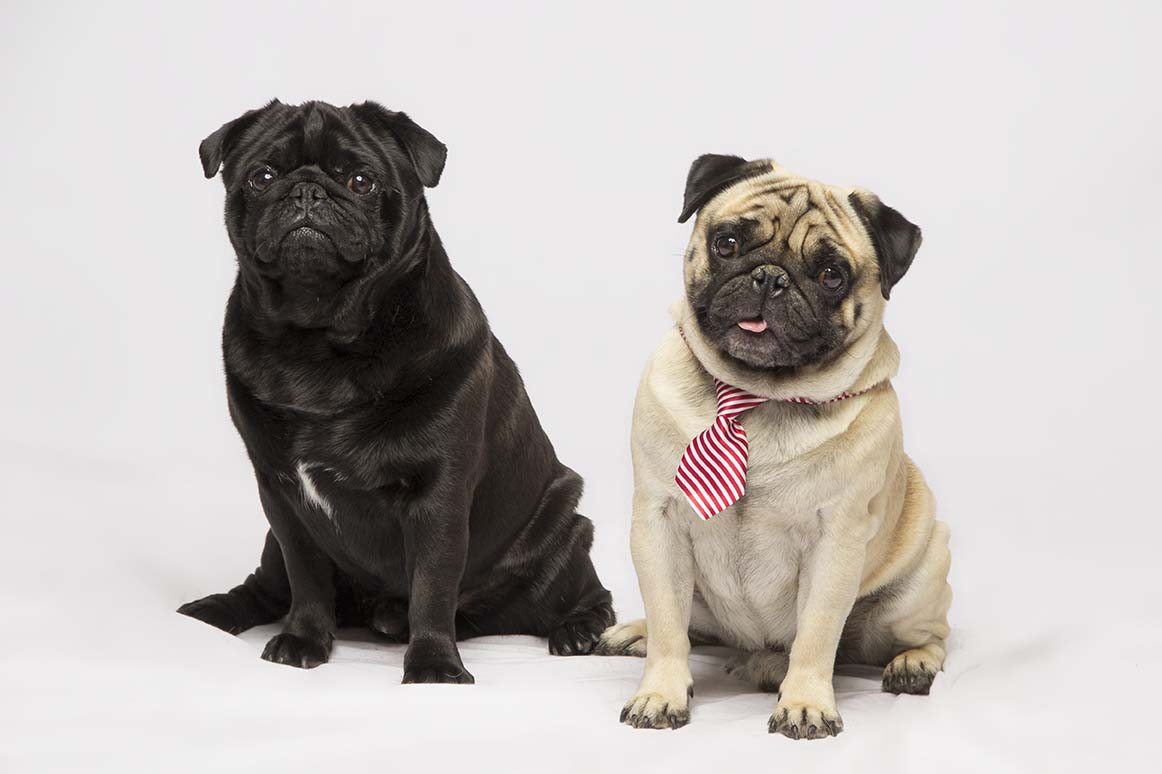
At ARISTOPET offices, we live with, among others, two wonderful Pugs, Evaristo & Mopsy, one is cinnamon and the other black, they fill our daily lives with joy and inspiration. Do you share your life with one? Tell us their story?
And if you are an absolute fan of this breed, check out this family of 6 pugs living with Cristina and Javier