


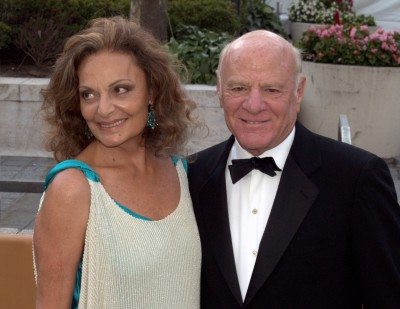
 The latest action by designer Diane von Furstenberg —which has nothing to do with fashion— has immediately made headlines.
The fact is that the well-known Belgian designer Diane Von Furstenberg and her husband, billionaire Barry Diller, have cloned their dog, Shannon.
Shannon is (or was) a Jack Russell who both Diane and Barry apparently pampered greatly. Shannon lives (or lived) in a large neoclassical-style dog house and stars (or starred) in many of the snapshots the designer posts on her Instagram. For the couple, Shannon is (or was) like their daughter.
We speak in the present and past tense because it is unknown what happened to Shannon after the cloning. Diller's representative has confirmed that the cloning was performed, but has not provided details on Shannon's condition or who carried out "the operation."
It is only known that the decision to clone her into two new puppies is due to the health problems the dog was experiencing. As well as that a Korean company (whose name is unknown) was in charge of the cloning process and implanted Shannon's DNA into two new eggs. The circumstances under which the cloning was carried out and when it took place are also unknown. However, the cost of the operation has been revealed: 90,000 euros.
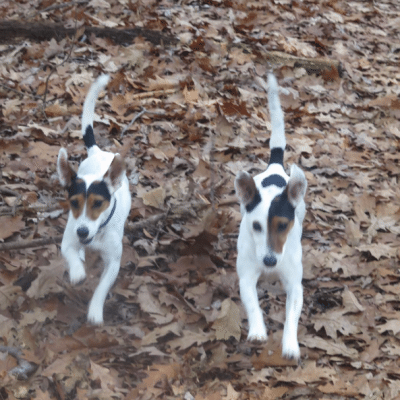
Little is known about the two replicas of Shannon, beyond the fact that they are called Deena and Evita. They have been seen fluttering around the couple and in several photos the designer has shared on Instagram. To all appearances, they are not exactly identical to their mother, nor even to each other, but they undoubtedly have the fun, restless, and playful spirit of Jack Russells.
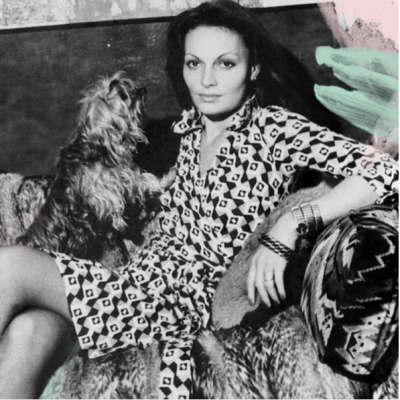
Beyond judgments and criticisms, it is clear above all that this couple feels a true love for their pets. Something that, without a doubt, is commendable. And, in the case of famous people, very useful for spreading the message of awareness in defense of animals that is so important to us. A love that knows no trends, because as can be seen in this photo, even when she was young, Diane couldn't resist posing with her furry friends.
Regarding pet cloning, more has been learned thanks to information provided by another couple who, faced with their bulldog's terminal illness, decided to clone it. For which they paid 70,000 euros.
Laura Jacques and Richard Remde, from Britain, explain that the process is based on extracting part of the animal's tissue from which cells are obtained. If these are confirmed viable, a breed with a similar ovulation time is selected to become an egg donor. The oocyte is enucleated (its genetic material is removed to be replaced by that of the animal to be cloned) and embryo transfer is performed to the "mother." This process takes approximately one day. Two months later, if the entire procedure has been successful, a puppy with the DNA of the animal from which the sample was taken is born. Impressive, don't you think?