


Many people tend to think that they can show affection to other people's dogs whenever they feel like it. While these gestures are appreciated, the truth is that they do not take into account the emotional or physical state the dog may be in.
Just as we have bad days and are "in a bad mood" (surely the person who first verbalized this phrase didn't know how lovely ARISTODOGS are); just as there are people who don't like approaches from strangers or having their personal space invaded; just as we are not always at 100% physically... dogs can also be or feel this way. But that's something no one, or almost no one, thought about. Until now.
"The yellow dog project" aims to identify dogs that need space and to educate their owners, and the general public, to promote appropriate contact with these pets. To do this, a yellow ribbon is tied to the leash, a yellow bandana is placed around the neck, or a vest of the same color is worn. This way, anyone, anywhere in the world, can distinguish them.
This code, adopted in several countries around the world, indicates that the dog needs space. The dog's owner is asking for people's cooperation from a distance:
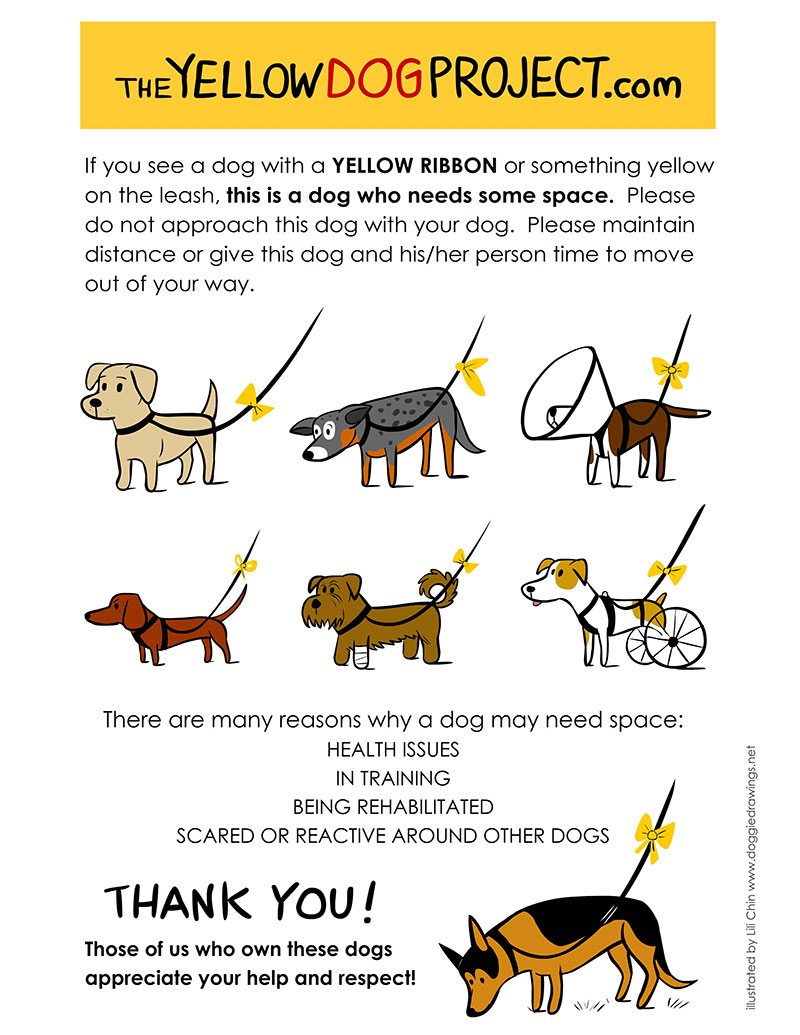
Do not approach, or if you do, do so with caution and ask first if you can, especially if the person is walking with small children or pets.
What dogs usually wear the yellow ribbon?
a) Aggressive or potentially dangerous dogs. Although not necessarily.
b) Dogs with specific problems.

Photo: Hawaii Doggie Bakery
In the second case, there are dogs that are not aggressive by nature who may need to wear the yellow ribbon for various reasons. Let's look at them:
– Dogs that are afraid of certain stimuli present on the street (people, whether children or adults, or other dogs). It is important to respect the space of these animals, as a frightened dog that feels cornered can react aggressively, even if its nature is not like that.
– Dogs that, due to fear or aggression problems, are undergoing a behavior modification plan under the supervision of an ethologist or a dog trainer and, for the moment, need to avoid approaches from other dogs, children, or people in general.
– Recently adopted dogs that need to gradually adapt to their new life.
– Females in heat. They also need to go outside, and when their owner is taking all precautions to avoid unwanted litters, it is also important for other owners to cooperate.
– Dogs that are in the training phase and are learning good manners when going for a walk.
– Dogs that are receiving training for a specific task or that are performing a job. For example: a guide dog, which must avoid distractions.
– Dogs that are not feeling well, that suffer from physical problems or that are recovering from an intervention... and which it is better to leave alone.
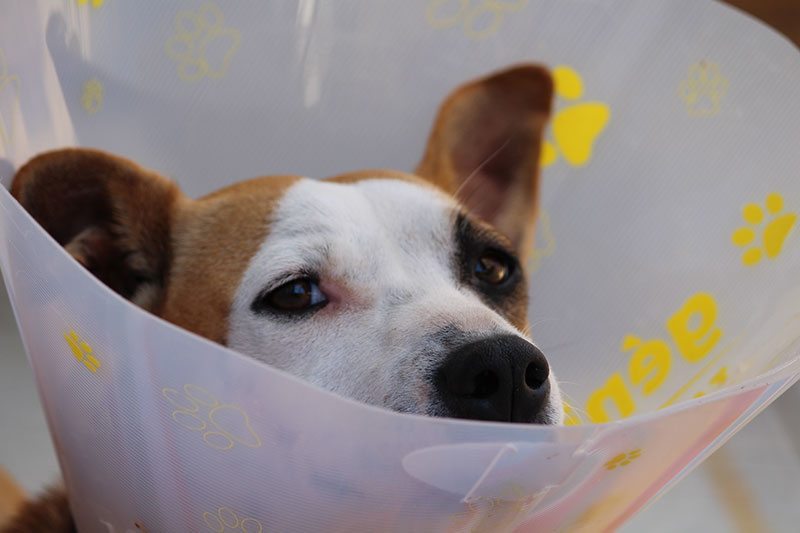
So now you know: from now on, when you see a dog with a yellow distinctive hanging from its neck or leash on the street, give it space: both it and its owner will thank you. Likewise, if you think your dog needs it, put it on them now!
We hope today's post was of interest to you. If you want to know more about this inspiring and useful project, click here.