


Since prehistory, animals have been represented by humans on cave walls as part of their daily lives. With the settlement of nomadic communities, the domestication of animals, and agriculture, they became part of their family group and culture.
In some civilizations, such as the Egyptian one, some animals were worshipped and considered deities, as depicted on many tomb walls and sarcophagi. One such god was Anubis, the funerary god with the head of a black canine. Some historians believe this is a reinterpretation of a specific breed, the Pharaoh hound, or, as it is better known in Spain, the rabbit dog. Cats, birds, and snakes are also present in Egyptian religion.
In Spanish art, among many others, Velázquez's dog from Las Meninas stands out. Lying in a corner, it is another actor in this futuristic composition, which is one of the masterpieces in art history. Goya and other painters such as Picasso or Dalí would later include dogs, birds, and other animals in their works.
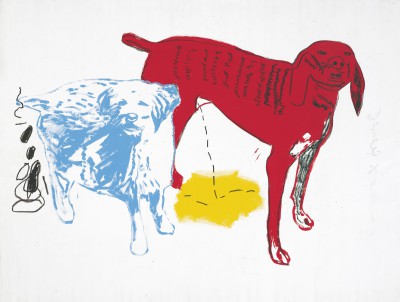
In Pop Art, the dog returned to canvases with painters like Keith Harings, who, with spectacular simplicity of line, sketched energetic little dogs that became immensely popular in mass culture. Andy Warhol also painted dogs in every imaginable color. An example of this is his work "Two Dogs," which he created with Jean Michel Basquiat and was auctioned by Sotheby's for one million dollars.
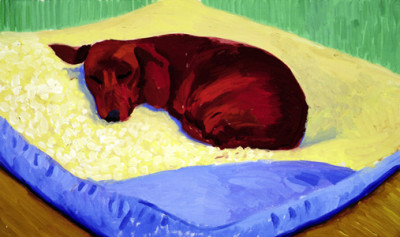
But if we focus on living artists, David Hockney's portraits of his dogs stand out, becoming world-famous after a series of portraits by the artist where we can see his brown pets frolicking in multiple poses on their little beds.
However, perhaps one of the contemporary artists who has immortalized the most animals is Jeff Koons. The controversial and multimillionaire creator has dedicated a large part of his career to depicting pets. Among his controversial works is "Puppy," Koons's dog that guards the entrance of the Guggenheim Bilbao and is one of the most amusing mascots in the art world. It is a giant West Highland terrier created through a structure with hydraulic irrigation, which supplies water to the flowers of different colors that form it, conceived by the American in 1992.
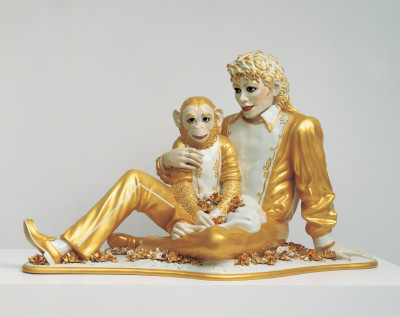
Nor can we forget his famous balloon dogs, shiny steel sculptures that resemble inflated balloon dogs. One of them reached a price of 58 million dollars at a Christie's auction. One of his most famous pieces is the 1988 portrait of Michael Jackson with his monkey Bubbles, a white and gold ceramic that depicts the artist with his pet sitting on his lap, both dressed in the same shirt. Animals are a constant in his work—lobsters, rabbits, monkeys, elephants, swans, panthers, snakes—revisited through his perspective, described by some as kitsch.
As we can see, humans are capable of continuously reinterpreting the iconography of animals, adapting their aesthetics to different artistic movements and the personalities of painters.
Links of interest:
http://www.sothebys.com/en/auctions/ecatalogue/2014/contemporary-art-day-sale-n09142/lot.265.html
http://www.hockneypictures.com/works_paintings_90_12.php
http://www.jeffkoons.com/artwork/puppy/puppy
http://www.jeffkoons.com/artwork/banality/michael-jackson-and-bubbles