


You have one cat and are considering bringing another one into the family, but you are afraid and insecure about how your current cat will react. This is often one of the biggest concerns for cat owners.
Cats are independent but very territorial animals. They are the owners of the house; they have control over their territory, their areas, and smells. Therefore, the arrival of a new member might not be well-received at first.
Thus, when deciding to bring a new feline member home, it is recommended to speak with a specialist or veterinarian who can advise you and provide some guidelines or tips to help ensure a smooth adaptation.
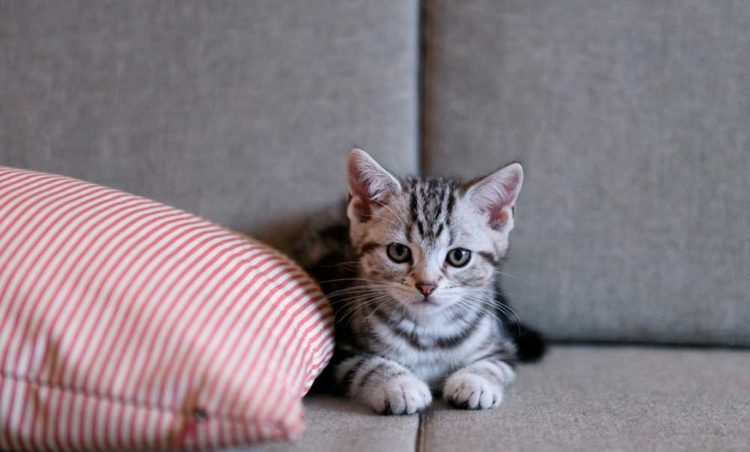
María Martínez, a veterinary ethologist at Clínica Malasaña in Madrid, has given us some advice on the procedure for facilitating the adaptation of a new cat in the home.
First, María emphasizes that each cat's past significantly influences the process. If your cat was separated from its mother and siblings too early and had no interaction with other cats, the adaptation process could be slower. However, if your cat had previously lived with other cats before you brought it home, adaptation might be easier.
Once the cat is home, what should you do?
Maria recommends following these steps:
1. Scent exchange.
For the first seven to ten days, it is recommended to keep them in separate rooms or areas, with no visual or physical contact. In each area of the house, each cat should have its respective food bowl, scratching post, toys, litter area, and bed, so that the new cat can gradually get used to its new home.
During these days, María recommends exchanging toys or blankets. A good technique is to rub a blanket on one cat's back or face and then take it to the other cat so they can get to know each other through scent.
2. Visual contact.
Once you perceive that the new cat is calmer and accustomed to its new home, you can move on to the next step, which is visual contact, but not physical.
To do this, you can bring the new cat in its carrier and let them sniff each other. At first, there might be some hissing or aggressive behavior from both sides. If hissing appears initially, it is recommended to return to the previous steps and proceed more slowly.
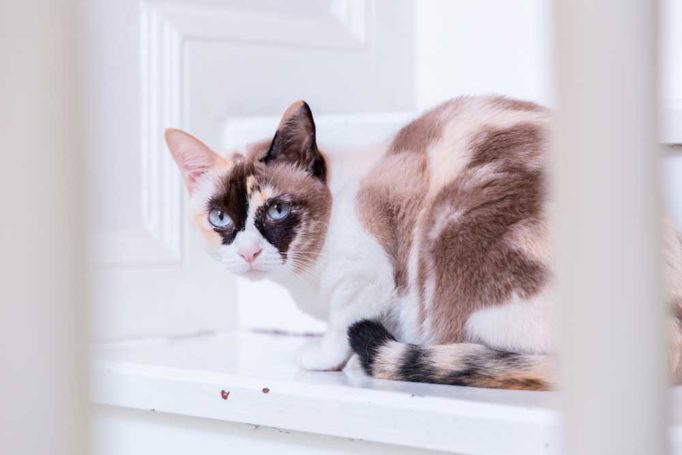
Another option is using a mesh gate or separating barrier, where both can see and smell each other but are not completely together. And a technique that María recommends is using “a can of wet food.” You place a can for each cat in their respective areas, so they can see each other eating. She affirms this technique is good because cats love wet food, and it can be a good way to encourage them to interact.
If, after a few days or a week, you see that both cats' reactions are good and neither shows aggressive behavior, you can move on to the next step.
However, if there is still aggressive behavior from either side, Maria recommends speaking with a specialist to supervise the situation and provide more specific and personalized advice based on each cat.
3. Physical contact
This is the last step, once the reactions from visual contact on both sides are good. You can then move to physical contact, without barriers. Of course, for the first few days, even while leaving each cat with its own area of the house and its belongings, and when you are not home, they should still be kept separate. At least until you see that there is no reaction and more than two weeks have passed.
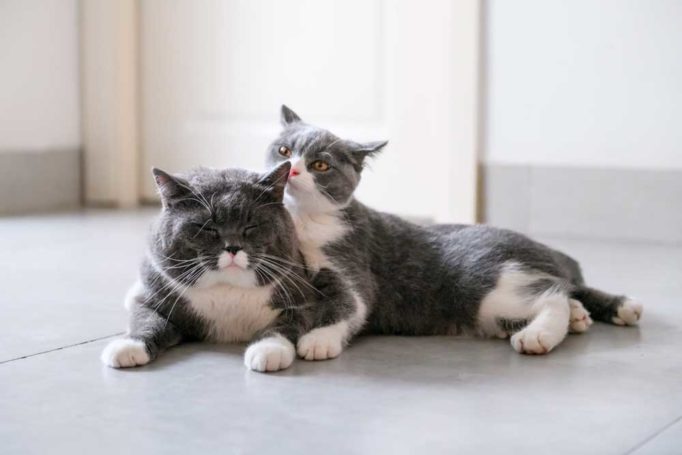
It is important to avoid any fights, as it is very difficult for cats to forget such harm. From a human perspective, they "hold grudges" more, and it is very difficult for them to forget and go back to how things were. Ultimately, as María says, cats are less sociable and more territorial, so if a fight occurs, it is hard for them to return to normal.
We hope these tips help you know how to introduce a new member into your home, but it is always recommended to talk to a trusted veterinarian for guidance.
If you have already experienced this situation, tell us about your experience on social media!
María Martínez, registered veterinarian specializing in behavioral medicine in Madrid
Clínica Veterinaria Malasaña
Madrid 28004