Sibling rivalry is natural. It's the result of clashing personalities, the search for attention, and a desire for possession: from toys, to food, to—of course—parental love. It usually coincides with childhood development and, over time, fades away. But while it lasts... it's hard to bear. Both for the siblings themselves, and for the parents (who hasn't experienced this firsthand?)
Fortunately, in many families (and more every day!), we have the wonderful presence of ARISTOPETS. ARISTOCATS and ARISTODOGS renew the energy of any home, help ease possible tensions, encourage play and collaboration, and ultimately, bring life to any house and any family.

In addition to that, they are children's perfect allies. They protect them, watch over them, love them, accompany them in their games, motivate them, and also, become a fundamental support for them, during this stage of life when they don't always see their siblings in a good light.
In many cases, a pet becomes a unique companion, not comparable to that of parents, friends, or siblings. An ARISTOPET is an ally, a confidant, a soulmate. That's why most children are eager to interact with animals, and those who have one at home long to return from school to see, pet, and play with them.
This is why, according to a study from the University of Cambridge, published in the Journal of Applied Developmental Psychology, domestic animals can greatly influence child development and have a positive effect on children's social skills and emotional well-being.
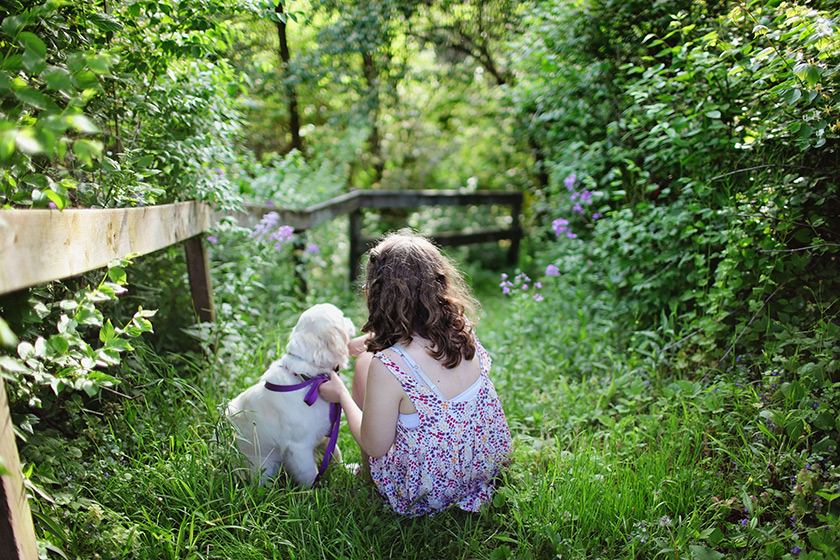
To demonstrate this, the research team surveyed 12-year-old children from 77 families, where there is at least one pet of any kind and more than one child in the home. Participating children stated that their relationships with their pets were very strong compared to those with their siblings. Within this group, children who had dogs showed relationships with lower levels of conflict and greater satisfaction than owners of other types of pets.
Even if ARISTOPETS don't fully understand or respond verbally, the degree of trust achieved with them is greater than when compared to that developed with siblings. The fact that pets cannot understand or respond verbally can even be a positive thing, as it means they "are not judging us." This would explain why some children, for example, cannot read aloud in front of other people, but can in front of an animal.
In our culture, having a pet at home is almost as common as having siblings. Anyone who has loved a pet during childhood knows that they provide companionship and trust, just as human relationships do. In fact, those of us who have had ARISTOPETS throughout our lives remember with special affection the one that accompanied us during our first steps, the one that was there for every game, every fall, every progress. That ARISTODOG or ARISTOCAT will always have a special place in our memory, comparable—why not—to that of a first love.