


Road accident rates have notably decreased in recent years. Fortunately, we are becoming more aware every day, understanding the risks we face, as well as the potential consequences of every distraction. We have improved a lot, although of course, there is still much to do. For example, regarding the care of our ARISTOPETS.
According to DGT data, 82% of pets travel in cars. The most frequent travelers are ARISTODOGS and ARISTOCATS. In 60% of vehicles, only one animal travels. In 29%, two animals. And in 11%, 3 or more. As ARISTOPARENTS, we wouldn't consider leaving our best friends alone. A vacation without them is not a vacation. That's why there are more and more traveling ARISTOPETS.
However, this must be accompanied by appropriate safety and protection measures. Following DGT data, 50% of drivers who own pets are unaware of the regulations governing their transport. Paradoxically, 91% of drivers consider it dangerous for both the animal and passengers to transport pets without protection. Something that 1 in 5 users does. Worrying figures, without a doubt. And even more so considering that, in the event of an accident, at a speed of 50 kilometers per hour, an animal multiplies its weight by 35. That's why we strongly encourage you to get well informed, be careful, and protect your pets well when you are on the road.
However, today we want to delve into an aspect that still remains in the background: the protocol for pet care in case of a traffic accident, where vehicle occupants must be transferred to a hospital or health center. What happens in these cases?

Pets are not allowed in ambulance transfers. They cannot get in. So imagine the suffering. Both for the ARISTOPARENT and for their ARISTOPET. Separated in absolute adversity. One heading to the hospital or health center, and the other, away from its owner, in a hostile place... Let's hope we never have to go through this situation.
However, if it does happen, we should be able to count, nationwide, on a pioneering and free service like the one launched in the Murcian town of Lorca. Its ambulance cooperative has developed an incredible initiative to respond to this situation.
This service is called AMAR, which stands for Assistance for Pets in At-Risk Situations, and aims to prevent unnecessary suffering for animals and people. The service consists of the ethical collection of pets that are in a helpless situation, either because their family has suffered a traffic accident, or because the person lives alone and must be transferred to the hospital, or is temporarily incapacitated to care for their pet.
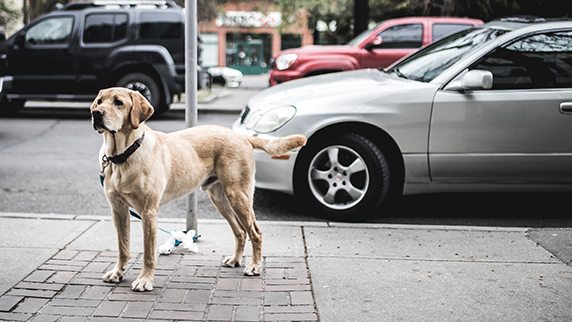
This AMAR protocol includes different steps to ensure that the animal is collected at the scene and is offered appropriate and adapted sanitary transport for the safety of pets. The professionals from Ambulancias de Lorca will voluntarily collaborate in this service, for which they will work hand in hand with veterinarians and professionals dedicated to the care and well-being of pets, who will be responsible for their follow-up and accommodation. In addition, it includes a monitoring service so that the owner can be calm and know at all times how their pet is doing.
For now, this service will begin to be provided in the municipalities included in Health Area III: Lorca, Águilas, Puerto Lumbreras, Totana, and Aledo, where residents can also arrange for their pet to be picked up if they have a scheduled surgical intervention or hospital admission.
Undoubtedly, this is a wonderful and altruistic initiative that we at ARISTOPET applaud. We trust that many other localities will follow suit and be encouraged to provide this service. We invite you to download the information PDF and read carefully what this service entails.
Here you can listen to the interview with the emergency technician from the Lorca City Council to learn more about this beautiful initiative.