


Is your dog hyperactive? Watch its diet
Hyperactive dogs can cause great stress and worry to all family members. Fortunately, most hyperactive dogs can improve with small changes in their diet, veterinary treatment, and variations in their exercise routine, which will allow both the dog and household members to feel much calmer.

Do you know the symptoms of hyperactivity in your canine friend? Grab a pen and paper to highlight all those that apply to your pet!
According to Miguel Ángel Signes Llopis, a certified Canine Trainer and Assistance Dog Instructor specializing in TAAC, accredited by the Generalitat Valenciana and author of the book MANUAL DE EDUCACIÓN Y ADIESTRAMIENTO DE PERROS DE TERAPIA (MANUAL OF EDUCATION AND TRAINING OF THERAPY DOGS), the common symptoms of hyperactivity are the following:
- The dog is unable to relax even without stimulation.
- Heart rate and respiration, as well as temperature, are elevated even during rest periods.
- The dog excessively seeks its owner's attention.
- Our pet's behavior is independent of its owner and the environment.
- The activity has no purpose or control. There is a lack of concentration, and exercises are not completed.
- The dog shows destructive behavior both in the presence and absence of the owner.
Similarly, the detection of this pathology should be discussed and studied by a veterinarian, as there are also cases where we classify our furry friends as "hyperactive" when they may actually just be exhibiting an activity level above the average for their species (i.e., their age and breed). These types of dogs are classified as overactive, indicates Miguel Ángel Signes Llopis, and their behavior is more linked to a lack of knowledge on the part of the owner about certain attitudes of their pet that should have been trained but were overlooked, resulting in dogs that demand a lot of attention in an exaggerated way and attitudes that seek to measure who is in charge in the home rather than a hyperactivity disorder.
How to differentiate a hyperactive dog from an overactive one?
Thanks to the contributions of Miguel Ángel Signes Llopis, we can highlight that an overactive dog exhibits the following behaviors:
- The dog shows a normal ability to sleep and rest, although the total rest time may be shorter than usual.
- Heart rate, respiration, and temperature normally vary with the level of activity.
- Frequent attention-seeking.
- Activity has a clear purpose. The animal concentrates on a task to complete it.
- Periods of activity are usually related to stimuli or events.
As you can see when comparing the symptoms, a hyperactive dog exhibits attitudes that can even continuously affect its daily life.
Fortunately, a great way to start seeing improvements in the behavior of our hyperactive dogs is to learn to supplement their nutrition responsibly and tailored to their needs.
How can we improve their hyperactivity through their diet? We'll tell you!
- A natural diet can be the best ally for all our ARISTOPETS:
The first step to calming your pet is to check the ingredient list on its plate. Many inexpensive dog foods are rich in sugars, salt, and by-products with artificial elements that can significantly affect our canines' behavior. In fact, this type of food has the same effect on our pets as sugar has on young children, making them feel hyperactive, nervous, and anxious. Ideally, you should look for alternatives that do not contain as much added glucose, salt, and coloring.
At ARISTOPET, we have a variety of reputable brands known for their quality that you can review with your veterinarian to find the one that best suits your pet's needs by clicking here.

- Another determining factor is identifying whether we should offer them a limited ingredient diet:
Hyperactive puppies can be allergic to certain proteins, grains, or other ingredients. Allergic reactions can sometimes resemble hyperactivity. If switching to a more natural diet doesn't seem to help, look for a limited ingredient diet that has a single protein your dog has never eaten. Venison, buffalo, and turkey are good options. Try to find grain-free foods and other limited ingredients to rule out food allergies.
https://aristopet.com/aristoshop/aristoperros/pienso-snacks-y-comida-humeda-para-perros/

- Reduce their protein:
Your dog's hyperactive behavior could also be due to an excess of protein, which it is converting into energy because its body tries to expend its properties through movement. Therefore, it's all about achieving a correct balance throughout the day, neither eliminating them completely nor oversaturating our canines unless their veterinarian advises otherwise.
- Exercise? Of course!:
Aside from diet as a determining factor in your pet's hyperactivity, it's also advisable to monitor how often per week it is getting exercise appropriate for its breed and size. For example, German Shepherds and hunting dogs are often breeds that demand a lot of activity, and it's an important detail to consider so we can adapt to their requirements. Consider training your furry friend in agility, frisbee, or herding competitions to help drain some of its innate energy. A daily walk can also help your dog get the exercise it needs.
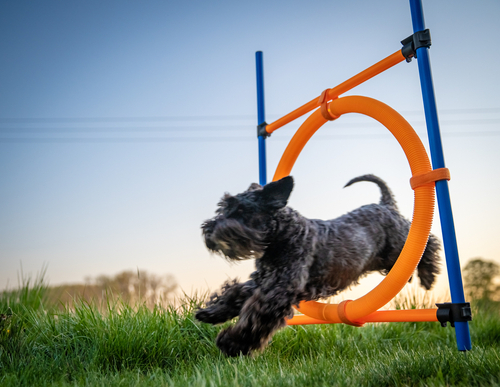
Want to check out our toy section, ideal for draining our pets' energy? Click here!
- Visit your trusted veterinarian:
If, after making various changes to improve your dog's hyperactivity through diet and exercise, you don't see changes, it's advisable to visit your trusted veterinarian and explain what actions you've taken and whether anything additional should be done, such as an examination for canine Attention Deficit Hyperactivity Disorder (ADHD), which, although uncommon, can be diagnosed and treated by a professional.
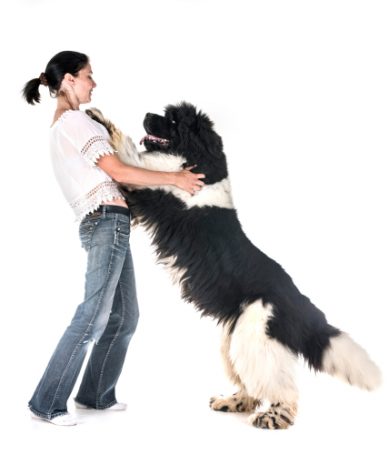
On the other hand, it is important to keep in mind that some dogs with thyroid problems tend to be hyperactive, but with the correct treatment, this can also be easily managed.
So now you know, ARISTOPETERS! Watch your furry friends' diet and always consult a specialist with all your doubts and concerns; they will know how to guide you on what is best for their lifestyle, breed, and age.
Additionally, we offer you a lot of reading so you can learn much more about your ARISTODOG and have a better quality of life with it.
Do you have an interactive dog? Tell us about your experience on social media; the rest of the community would love to learn from your experience.
#welovepets … just like you 🙂