


ARISTOCATS are among the most popular pets in the world and have something special that makes them different. That's why we want to share some curiosities that you surely didn't know about these very special animals.
1. Cats are able to distinguish and recognize the voices of the people they live with and spend a lot of time with, but not the voices of strangers. Furthermore, unlike dogs, they do not come or respond when called (Gizmodo, University of Tokyo).

2. Cats prefer women as owners and the reason for this is that cats tend to direct their attention to a high-pitched voice because it closely resembles the sound made by female cats. When they hear a female voice, they feel much more closeness and comfort (University of Vienna).

3. Cats can get stressed without their owners realizing it, even affecting their health, with one of the most common causes being a bad relationship with other cats. The majority of vet visits are usually due to injuries sustained in fights with other felines, and not only do these lead to stressful situations for them but sometimes also to dermatitis or cystitis (John Bradshaw is a feline behavior expert at the University of Bristol). A study conducted at the Faculty of Veterinary Medicine of Utrecht University shows us that the fascination that cats generally have with cardboard boxes helps them significantly reduce this stress.

4. A cat's purr produces vibrations in its body from 25 to 150 Hz, and it has been shown that a vibration between 35 and 50 Hz helps bone healing and generally contributes to strengthening the body's bone structure. In this case, purring can be considered to act as an internal body massage. A field study on cat purring conducted by Current Biology showed that when cats demanded food from their owners, the frequency of their purring spiked up to 520 Hz (similar to the cry of a human baby asking for food, which reaches 600 Hz).
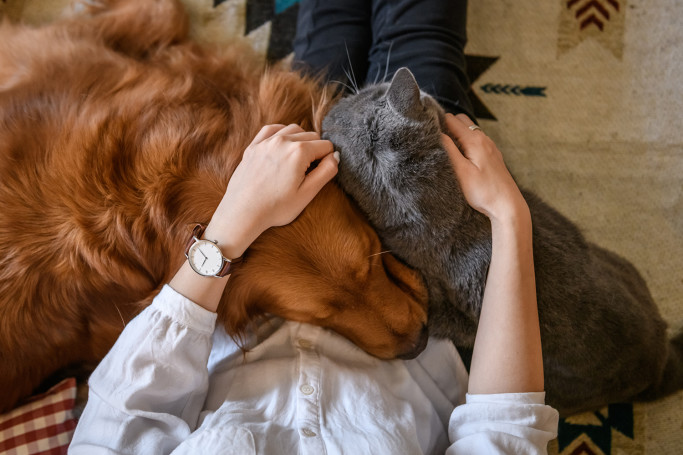
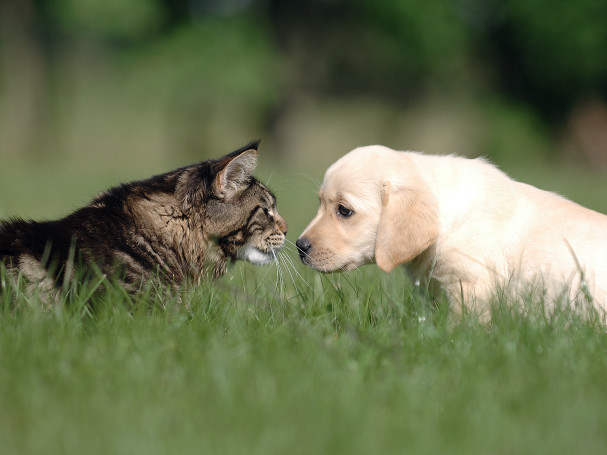
5. The theory that dogs and cats cannot get along is false. Although researchers acknowledge that felines may have some initial reluctance to live with a dog, in general, the two species usually live in harmony (Sophie Hall, Journal of Veterinary Behavior). In fact, according to a study by the University of Lincoln, dogs and cats rarely fight, while 57% of surveyed owners admit that their feline hisses at their dog, only 10% of felines, and barely 1% of canines, have ever caused physical harm to the other animal.
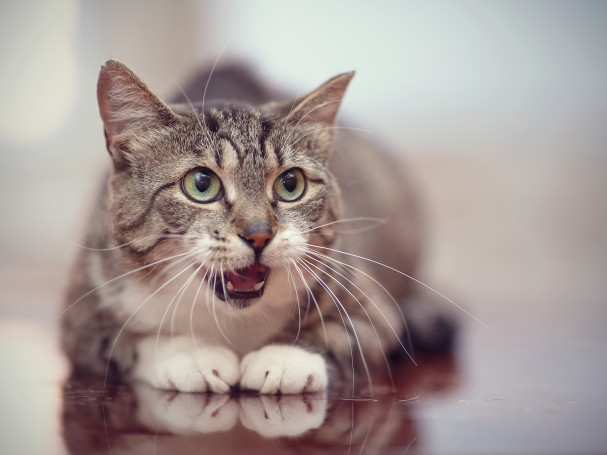
6. Cats' meows are nothing more than a way to get humans' attention. Any cat owner can attest that their pet becomes quite "talkative" when it wants something. "In my experience studying felines, I have come to the conclusion that they are the ones who have 'well trained' their humans," explained Adi Hovav, feline behavior advisor at the ASPCA Adoption Center.
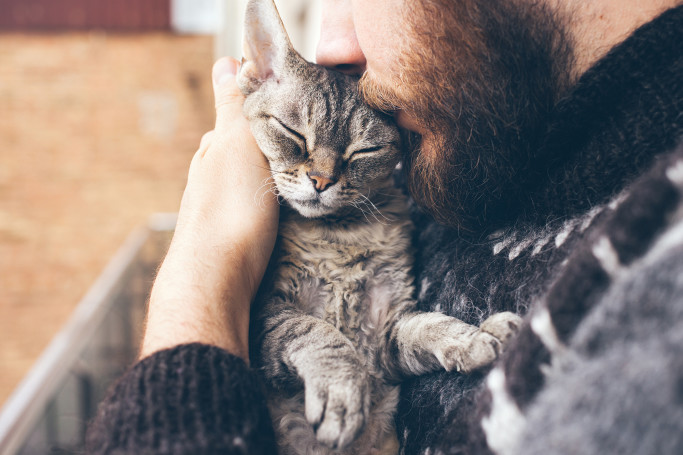
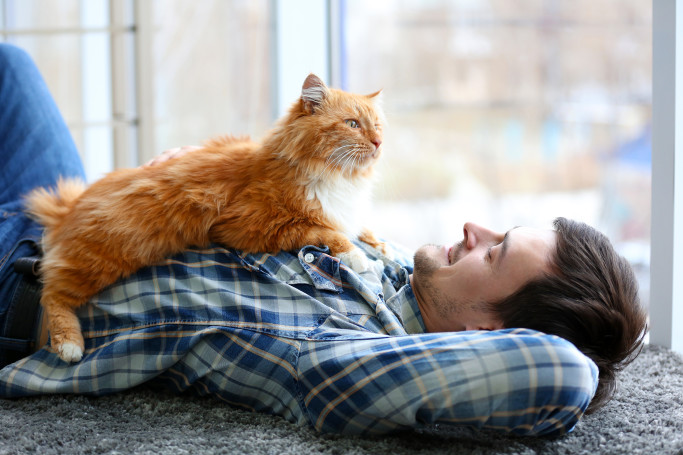
7. Most felines prefer to interact with humans rather than engaging in other activities, even eating. A scientific study carried out by Oregon State University showed that more than half of the analyzed animals preferred social interaction with humans, despite not having been fed for hours. Even shelter cats, who are not used to interacting with humans, preferred the company of a person over food.
8. Cats have 250 million neurons compared to dogs' 530 million. A study by Vanderbilt University in Nashville, Tennessee (USA) found that dogs are more intelligent than cats, based on the number of neurons each species stores in its cerebral cortex. The study also showed that brain size does not affect intelligence; a Golden Retriever's brain has more neurons than a hyena, a lion, or a brown bear, even though larger predators have brains up to three times larger.
9. Cats do not perceive their owners as part of a safe environment for them. A team of behavioral veterinary experts from the School of Life Sciences at the University of Lincoln (United Kingdom) conducted a study whose conclusion determined that the relationship between humans and cats in terms of protection and security is very different from that of dogs and humans. While dogs perceive their owners as part of an environment in which to feel safe, cats, on the contrary, do not feel this protective refuge, which is why they are much more independent. A cat may enjoy interacting with its owner but does not depend on them to feel safe, which aligns with the independent and solitary nature of this species.
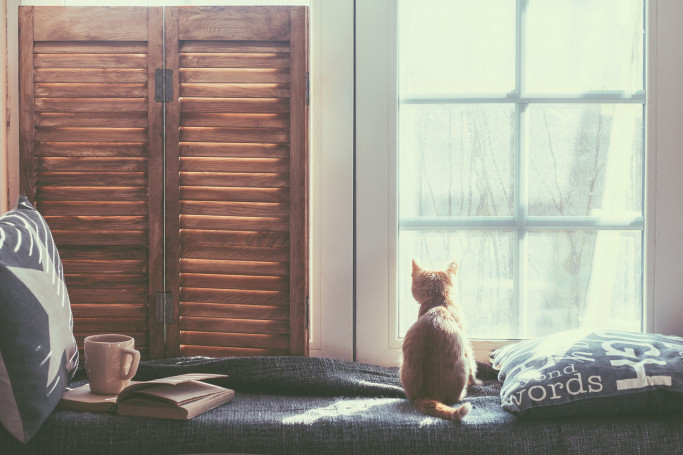
10. A study conducted by the Swedish University of Agricultural Sciences reveals that cats miss their owners even though their behavior when left alone at home is normal. The results showed that felines did not exhibit different behaviors before their owners left or while they were alone. What was observed is that, when the owners returned, these pets showed a more affectionate attitude with purring and body stretches, proportional to the time the owners were absent, the research specifies.
And these are just some of the many curiosities about the world of ARISTOCATS. Which one did you find most surprising? Tell us on social media!