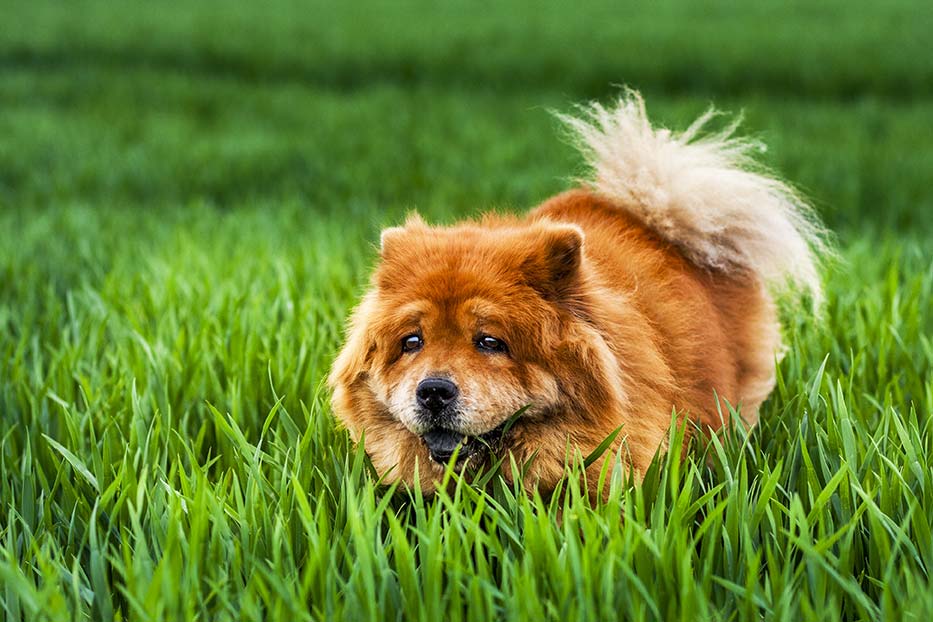
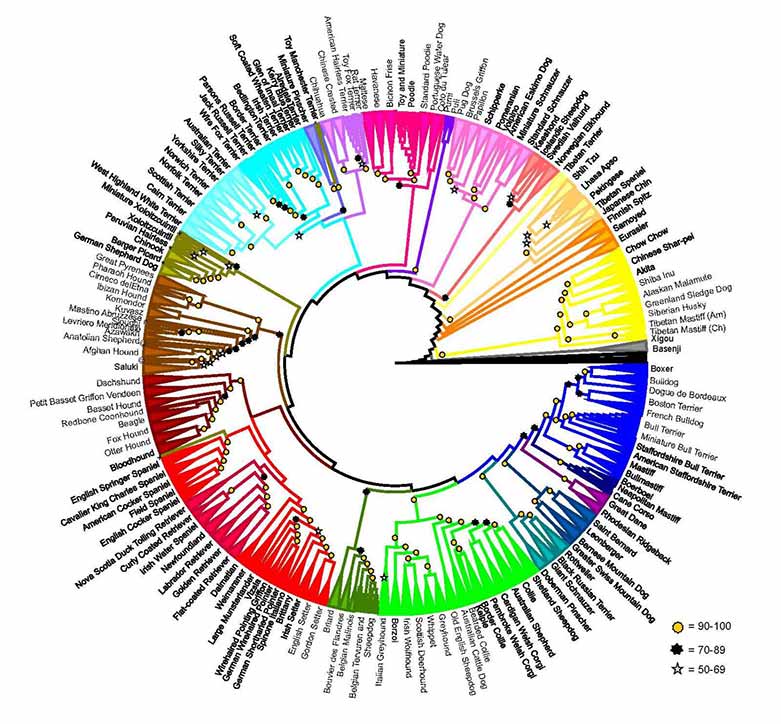
Today, there are nearly 400 breeds of ARISTODOGS in the world. Each has its own history and a unique genetic profile. But how do their stories intersect? What does their shared family tree look like? A team of American scientists, led by the National Human Genome Research Institute, has set out to reconstruct their evolutionary history. And they have created the most complete family tree to date, through the genetic sequences of 161 dog breeds.
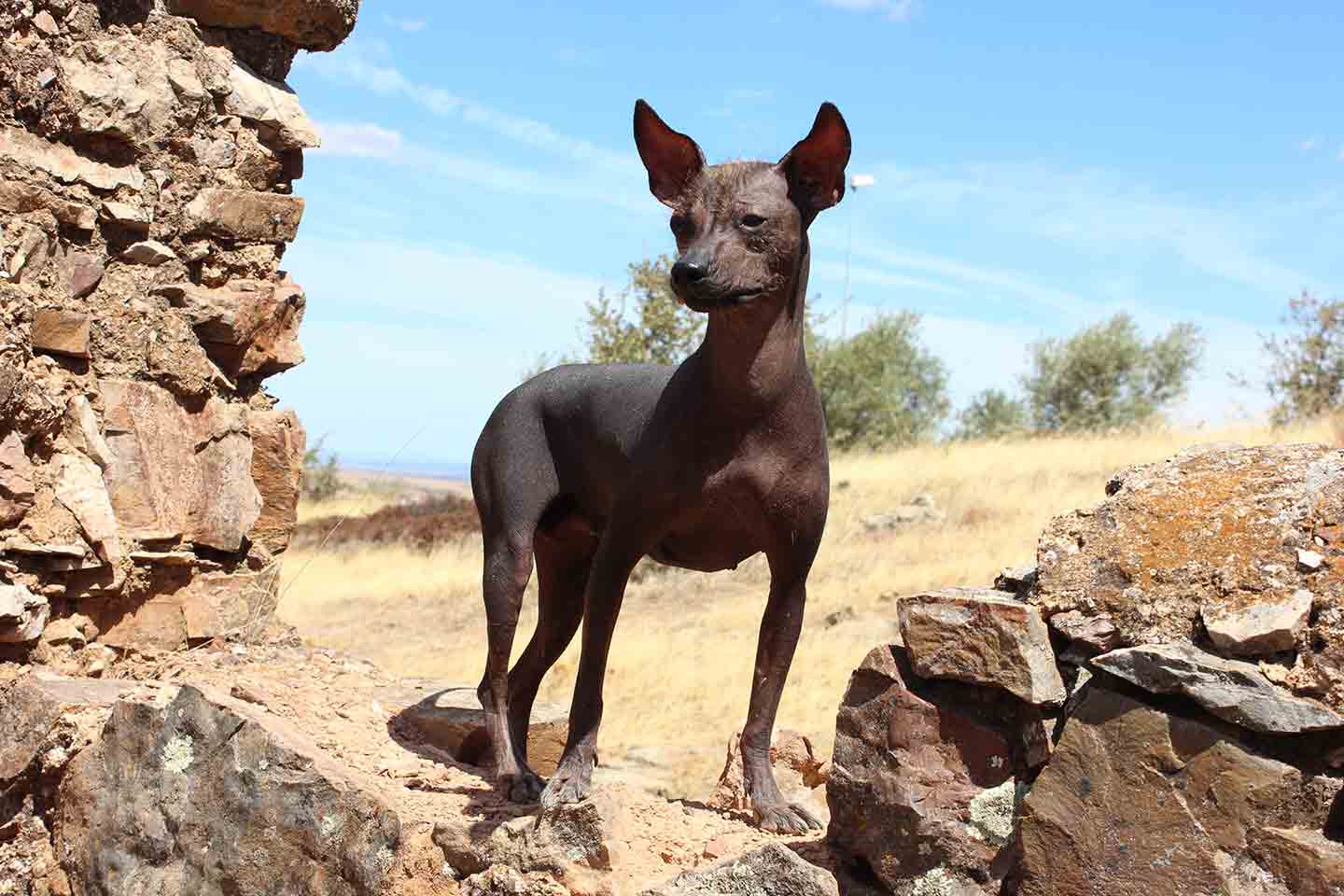
To begin with, the study reveals the first genetic evidence in modern breeds of the "New World dog," a canine subspecies that migrated across the Bering Strait with the ancestors of Native Americans and arrived in America about 10,000 years ago.
It also shows that the domestic dog has accompanied humans in all their migrations. In fact, although archaeological evidence already existed, the study presents the first evidence in modern breeds of the existence of this New World dog, from which some Central and South American breeds likely descend, such as the Peruvian Hairless Dog and the Xoloitzcuintle.
This research also shows that the bond between them and us is almost as long-lived as we are, but at the same time, it makes the task of reconstructing the dogs' family tree more difficult, as the clues have been scattered over the centuries and across the genomes of hundreds of breeds.
In any case, thanks to the DNA sequences of 1,346 dogs belonging to 161 modern breeds, the scientific team has created the largest evolutionary map of dog breeds. The results, published in the journal Cell Reports, demonstrate not only the hybridization history of the breeds but also the effects that migrations had on their genes—fundamentally their current diversity.
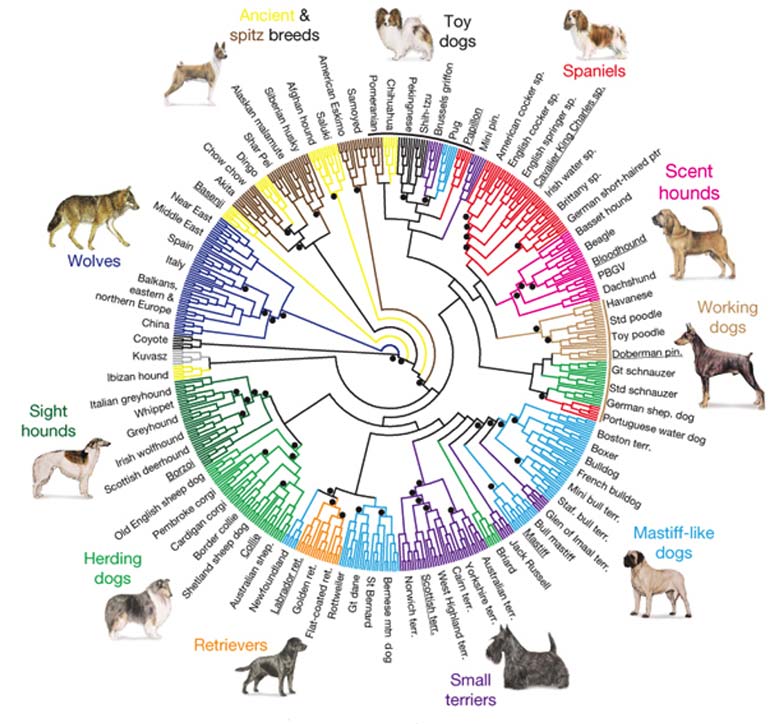
Source: National Human Genome Research Institute
To understand how the oldest dog breeds evolved and what roles they played for humans, researchers selected certain breeds, as well as recent crossbreeds to obtain other physical traits.
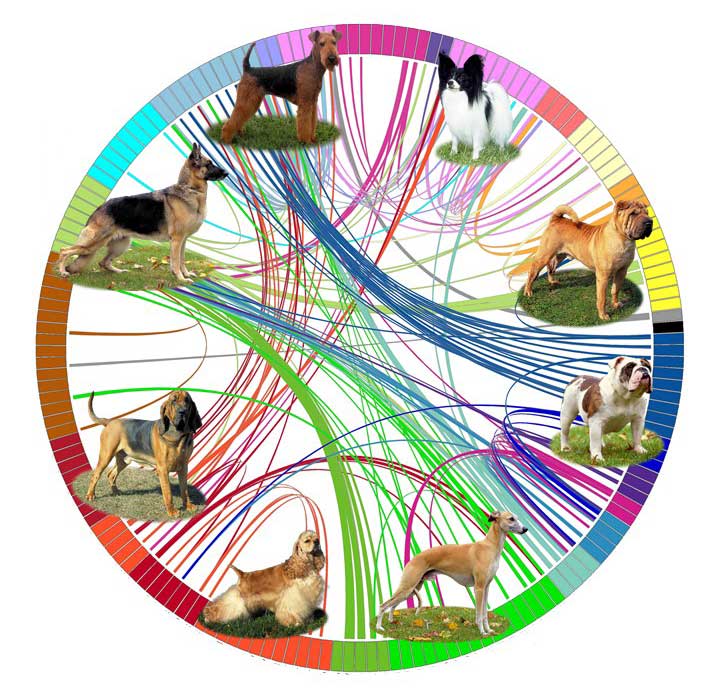
Source: Science X
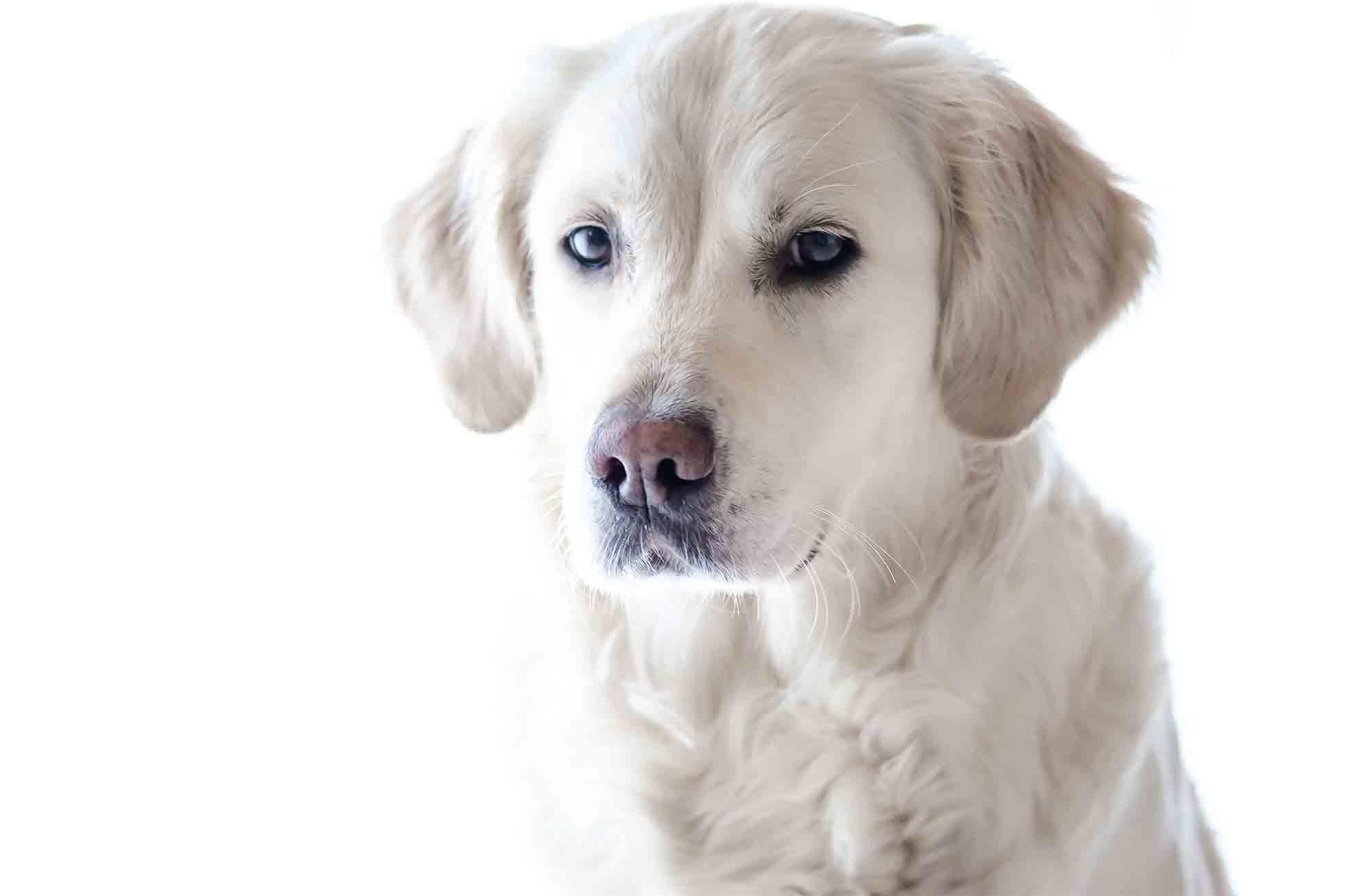
And the results were surprising. Many hunting breeds, such as Golden Retrievers and Irish Setters, originated in Victorian England in the 19th century, when new uses of firearms for hunting expeditions were developed.
These dogs were grouped together in the phylogenetic tree, as were Spaniel breeds. Those from the Middle East, such as Salukis, and from Asia, such as Chow Chows and Akitas, appear to have separated much earlier than the "Victorian explosion" in Europe and the United States.
Regarding herding breeds—most of European origin—it is notable that they are unexpectedly diverse. Much more diversity is observed where there was a particular group of herding breeds that seemed to come from the United Kingdom, a particular group that came out of Northern Europe, and a different group that came out of Southern Europe. This confirms that people used them for work thousands of years ago.
The team of scientists has been sequencing dog genomes for years, but more than half of the breeds that exist today have not yet been sequenced, so scientists are trying to collect other dog genomes to fill these gaps.
In addition to the scientific information that opens the way for other research, these studies allow the identification of genes that cause diseases (epilepsy, diabetes, cancer) in both dogs and humans. This is because with this data, the migration of disease alleles can be tracked and where they are likely to appear can be predicted.