


Pomeranians are those beautiful, active little balls of fur. What is often not known is that they actually come from a group that traditionally included larger guard and companion dogs: the German Spitz.
German Spitz descended from the "canis familiaris palustris Rüthimeyer," a tundra dog that existed during the Stone Age. For this reason, it is estimated that this is the oldest breed in all of Central Europe and a large number of breeds originated from it. In non-Germanic countries, wolf-type Spitz are better known as Keeshonds. While the miniature ones are the famous Pomeranians, which we want to tell you about today.
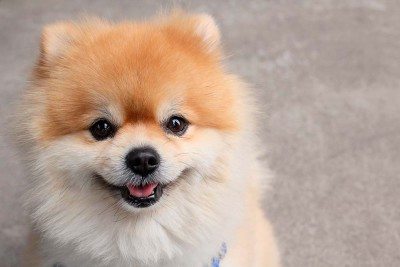
What are Pomeranians like?
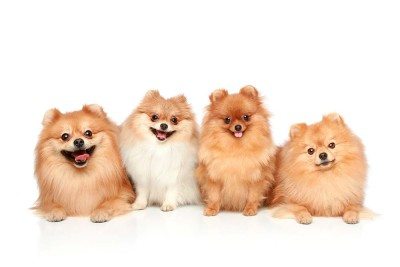
The most distinctive and special feature of Pomeranians is their beautiful coat, in black, brown, white, orange, or grayish colors. A long, straight coat, separated by a kind of very dense internal wool, which makes the fur of these ARISTODOGS appear thick and voluminous. The abundant mane they have around their neck is very striking, like a warm scarf or stole. The tail is also covered with long, soft hair, and it's very funny to see it curled upwards and extended over their back, like a cabaret star's boa.
Their head reminds us of foxes, with that intelligent, eager, and alert look, but also affectionate (especially when they tilt their head to look at their owners), with brown, medium, and cheerful eyes. Their black, small, and round nose helps to soften their expression. While their pointed and close-set ears give them that irresistible touch. In fact, when you see a Pomeranian in action, it seems to want to say "here I am," something that is enhanced by their light trot, as if they were flying.
Pomeranians typically measure between 20 and 22 centimeters. And their weight ranges from 1.9 to 3.5 kilograms. Their small size facilitates travel and commutes, as model Mar Saura told us in this recent editorial about her miniature Pomeranian, Willow.
How do Pomeranians behave?
Due to their origins, Pomeranians are always alert. Nothing escapes them. Younger specimens are surprisingly active and in all cases tend to be quite dependent on their ARISTOPARENTS, so it is important to train them well from a young age so that they do not suffer excessively from separation anxiety.
Pomeranians also have a surprising ability to learn. In fact, they learn quickly and can be trained to learn tricks, as well as basic rules of behavior.
Generally, they distrust strangers quite a bit, which makes them great guardians. Hence, in ancient times, that was their role in homes, lands, and farms. Nowadays, as undisputed kings of the family, that is not expected of Pomeranians, but they still carry within them that predisposition to protect.
How to care for Pomeranians?
Despite their small size, Pomeranians are robust and highly resistant to the elements (thanks to their coat). Most specimens are very long-lived, which is a factor to consider.
Of course, when choosing a Pomeranian as a life companion, longevity is an important aspect, as it is a kind of promise that, if all goes well, we will be together for many, many years. Of course, we must be aware that a senior dog requires many specific care, both in terms of diet and lifestyle. Although, of course, it also presents many advantages.
Likewise, we must focus on the longevity of this breed from the early stages of its life. Because a healthy and well-cared-for dog today has a better chance of enjoying a higher quality of life in the future. So we must care for them with an eye on their old age.
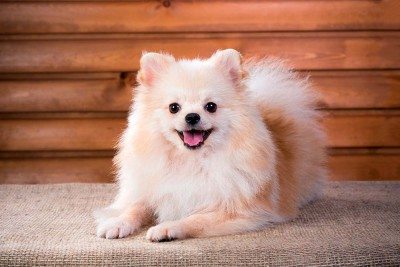
If you have a Pomeranian, we are eager to see its photos and for you to tell us what your life with it is like. We look forward to your comments on our social media!