


For many of you, the name Nikolaas Tinbergen might not "ring a bell." That's why today at ARISTOPET, we've set out to change that. Because Nikolaas Tinbergen, Niko to his friends, was a Dutch zoologist, known for being one of the fathers of ethology.
Niko was born in The Hague in 1907 and earned his doctorate in Science at Leiden University, where he was a professor of Experimental Zoology. He later worked at Oxford University as a professor and head of the Animal Behavior Research Department.
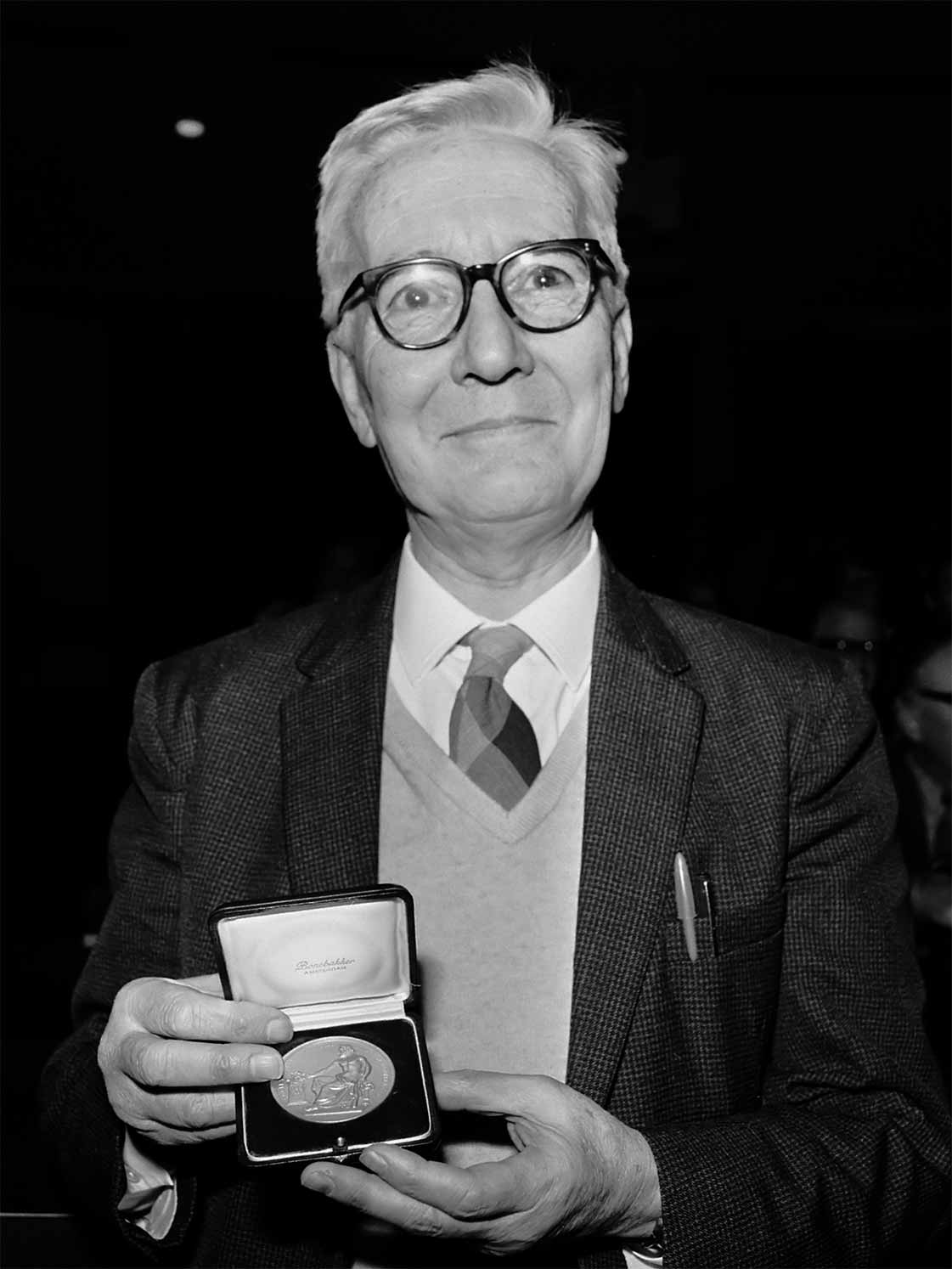
His passion for animals dated back to his adolescence. In 1925, he discovered the mass autumnal migration of birds and elk in the Curonian Spit. As a result, he decided he wanted to study Biology at Leiden University, where he began in 1935. There he dedicated himself to teaching comparative anatomy and organizing a course on animal behavior for students.
A year later, Niko met Konrad Lorenz, the other father of ethology, whom we already discussed in this post. Lorenz was invited to Leiden University to participate in a symposium on instincts. The affinity between them was so great that Lorenz invited him to spend four months at his home in Altenberg (Austria). Those months were crucial for consolidating their lifelong friendship and for laying the foundations for their collaborations and research, as we can see in this photo.
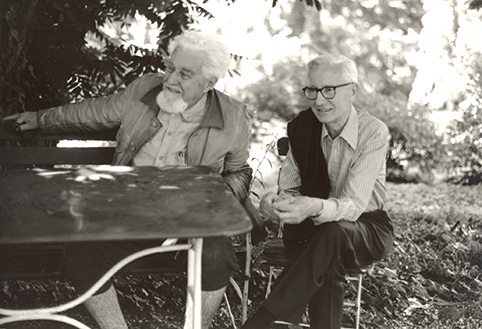
His work pace, from 1938 onwards, became highly intense. During all this time, he exchanged correspondence with Lorenz, of course. Until the war broke out. They lost contact until 1947. As he was in a German camp and Lorenz was recruited as an army doctor.
For all his work, he received recognition and acceptance from the scientific community. He was appointed a Fellow of the Royal Society in 1962; a foreign member of the Koninklijke Nederlandse Akademie van Wetenschappen in 1964; he was awarded an honorary Doctor of Science degree by the University of Edinburgh; he received the Swammerdam medal from the Genootschap voor Natuur, Genees, en Heelkunde of Amsterdam in 1973.
In his comparative studies of animal psychology, he managed to establish the value of the stimulus as a sign, in the sense that the signals transmitted by animals include behavioral sequences. He related this phenomenon to the existence of a coordinating unit in the nervous system.
He received the Nobel Prize in Physiology or Medicine in 1973, shared with Konrad Lorenz and Karl R. von Frisch. This was the second award in this category to reward his family, as in 1969 his brother Jan Tinbergen had received the Nobel Memorial Prize in Economic Sciences. Which gives us clues as to how prodigious his family was, academically speaking.
His notable works include The Study of Instinct (1951), his most influential book, and The Animal in Its World. Field Studies.
In this video, you can see the experiment carried out with the stickleback fish, which allowed him to provide a new conception for the term "instinct," understood as a nervous mechanism.
If you want to learn about other relevant figures in the field of animal knowledge, whom we have already discussed at ARISTOPET, click here. And if you think this post might be interesting for your friends, share it!