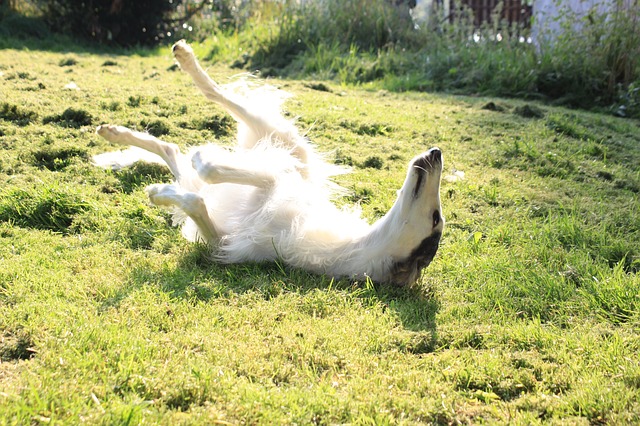
Greyhounds, those dogs that steal your heart when they look at you, were already known to the Romans in ancient times. In fact, their name comes from vulgar Latin: Gallĭcus canis, or in other words, "dog of Gaul."
According to the Fédération Cynologique Internationale (FCI), greyhounds descend from ancient Asian sighthounds and are classified as short-haired sighthounds - although there is also a wire-haired variety. Greyhounds belong to a purebred race, meaning their characteristics have been achieved through natural selection over centuries and not by cross-breeding with other breeds.
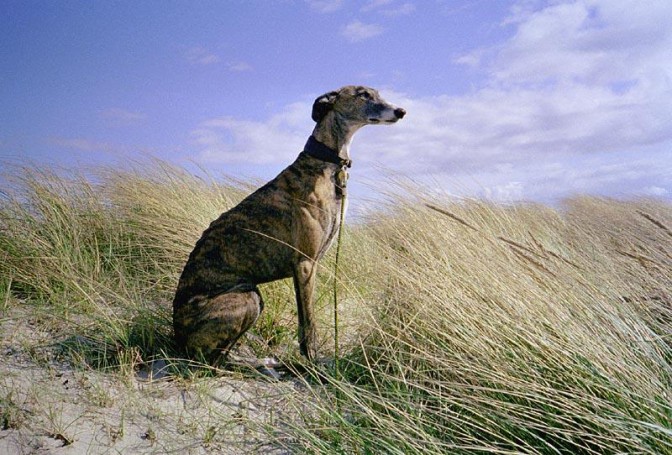
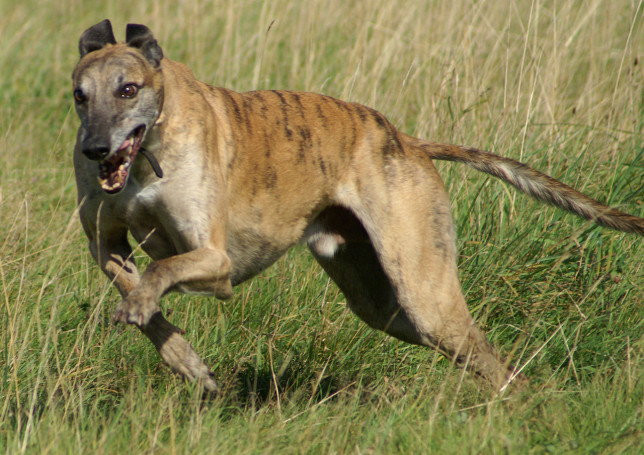
Greyhounds are great runners. They can reach speeds of 60km/h. For this reason, they have traditionally been hunting dogs, whose primary objective was hares. Their hunting origin has undoubtedly contributed to them not receiving the good treatment and respect they deserve. So much so that numerous expressions proliferated in colloquial language that did not put our beloved greyhounds in a very good light.
Expressions such as "échale un galgo" (meaning it's difficult to catch up with someone, or to understand or obtain something); "el que nos vendió el galgo" (an expression used to refer to someone known for disappointments); "la galga de Lucas" (denoting someone's absence when they are most needed); "váyase a espulgar un galgo" (which means to dismiss someone with contempt) and many more. Although, luckily, most of them have already fallen into disuse.
Greyhounds are also present in popular sayings such as "de casta le viene al galgo: rabicorto y patilargo" (it's in the greyhound's blood: short-tailed and long-legged). Or "a galgo viejo, echadle liebre, no conejo" (which recommends assigning difficult tasks to experienced people, in accordance with their expertise and capabilities). Or also "galgo que va tras dos liebres, sin ninguna vuelve," meaning it's better to have a clear goal than to divide efforts. And even: "Más corre el galgo que el mastín; pero si el camino es largo, más corre el mastín que el galgo. No obstante, los dos corren bastante," which highlights the differences between them, without detracting from their respective natures.
In literature, greyhounds have also played a certain role. The Archpriest of Hita wrote that "To the hare that appears, he immediately sets the greyhound upon it...", highlighting the main and ancestral function of this breed. Benito Pérez Galdós also mentions greyhounds in his work Amadeo I in the following fragment:
"I was on the verge, believe me, of jumping from the console into the lap of the whiskered lady to congratulate her on her accurate advice. What discretion, what talent, what quick eye! I said to myself: "It's in the greyhound's blood. I know you were sired by the greatest writer of the century! [...]"
And, of course, greyhounds are also mentioned in the first sentence of the most important work ever written in Spanish:
"In a village in La Mancha, whose name I do not wish to recall, not long ago lived a hidalgo with a lance in a rack, an old shield, a skinny nag, and a running greyhound."
Gradually, the situation is changing, and insensitivity towards greyhounds is no longer commonplace. Thanks, among other things, to the awareness work being carried out by associations like SOS Galgos. Today, it is known that greyhounds are perfect companions. Because of their somewhat shy and sweet nature, their nobility, because they adapt well to home life, and they are tolerant of the presence of other pets. Not to mention their beauty. It was only a matter of time before such charming animals took their rightful place in society.
Which of you is lucky enough to have a greyhound as a pet? Share your experience on Aristopet's Social Media.