


A few weeks ago, news from Belgium surprised us. Belgian authorities announced in mid-April that, from now on, domestic cat owners are obliged to sterilize them... or face a significant fine.
This country is the first in the world to impose this measure on PET PARENTS, and the truth is, it has generated a lot of controversy. For some, it's surprising that in 2018 something like this would happen in a country that, theoretically, is ahead of many others in terms of animal welfare. For others, it's a government scheme to get more money from citizens. And for still others, it's a lesser evil, although nowhere near the ideal solution to combat the problem of animal abandonment.
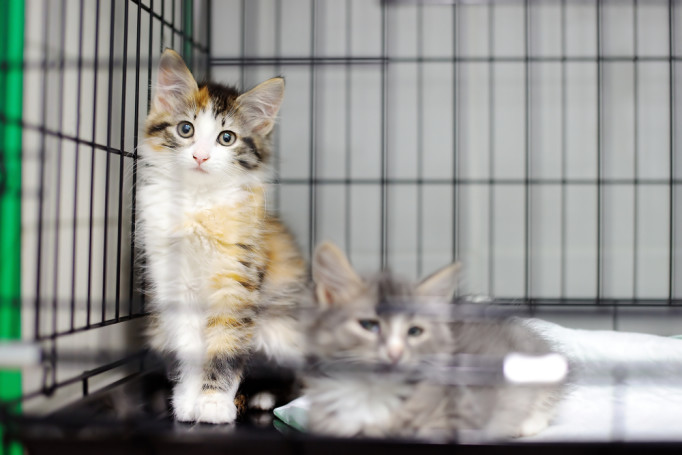
Regardless of what each of us thinks, we consider this measure significant enough to share here. The Belgian government claims that this is a way to protect cats from abandonment and abuse, as they are currently facing an unprecedented problem of feline overpopulation. Thus, the Animal Welfare officer in the Flanders region announced that "anyone who wants to keep their cat must sterilize it. Otherwise, they will have to take responsibility for the dozens of offspring that end up on the streets, in shelters, or are euthanized."
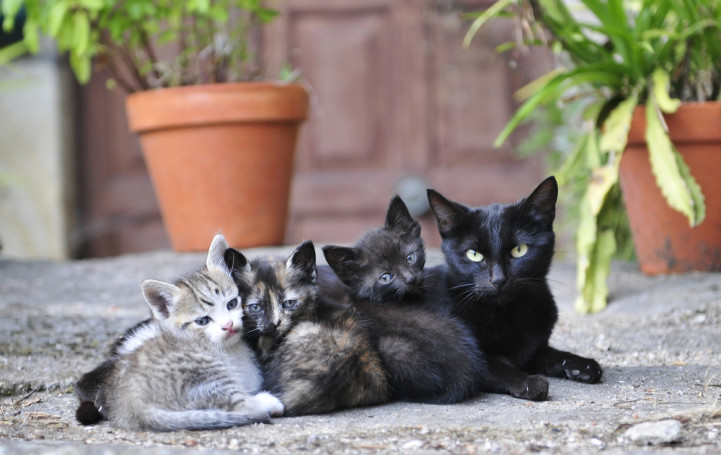
In this way, every feline older than six months in Belgian territory will have to be spayed or neutered, with the aim of preventing cats from reproducing uncontrollably and, consequently, ending up like many of them do: in rescue shelters or kennels where, due to lack of economic resources and space, the lives of many have a very tragic end. In fact, according to data, in the Wallonia region, authorities collect about 30,000 cats every year, of which 10,000 do not survive. And in Flanders, a region with just over six million inhabitants, the government estimates there are more than one million cats.
According to other data, it is estimated that each feline pair can have eight offspring per year. Kittens that are already fertile at six months, meaning that in just one year, 40 new animals can be born from that initial pair. Belgian authorities refer to this as "exponential growth" and assure that from a single pair, 5,000 cats can be born in just five years.
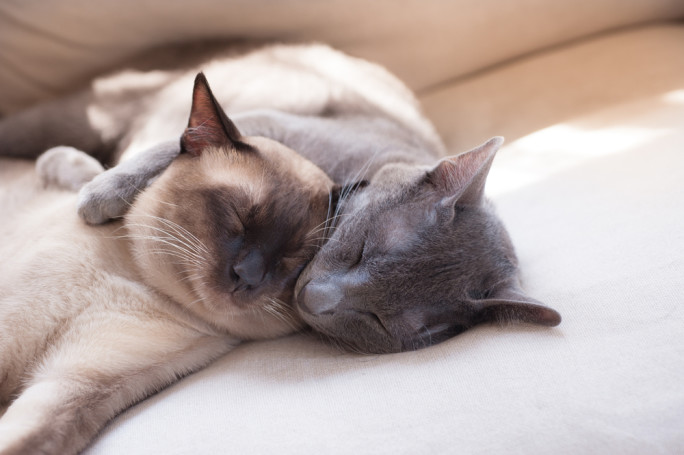
With this feline population, shelters are overwhelmed and unable to find PET PARENTS for so many rescued cats. Therefore, they say this measure is necessary to solve the problem and thus prevent cats from continuing to live poorly on the streets and perish in shelters. The goal, therefore, is to find a balance between adoptions and abandonments.
Owners, for their part, see many loopholes in this cat sterilization. On the one hand, there is health, as many of them gain weight when sterilized and do not receive adequate food and attention. On the other hand, there is the price. This veterinary intervention ranges between 150 euros for females and 75 euros for males.
Aware of this deterrent, the Animal Welfare Department reminds that, despite what is generally believed, the operation extends cats' life expectancy, reduces the risk of diseases, as well as their aggressiveness and the sounds females emit during heat. But since they know that reasons are not enough, they also plan to subsidize part of the cost, as they did last year. At that time, they allocated just over 92,000 euros to subsidize part of the sterilization of Belgian domestic cats.
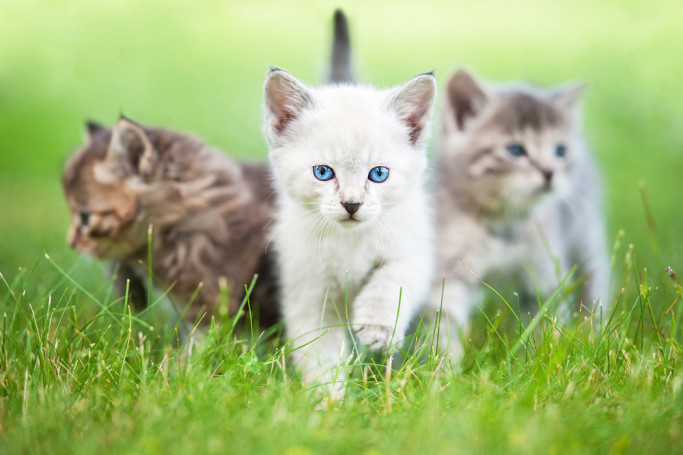
Of course, this new rule also applies to foreigners settling in Belgium. And non-compliance will definitely result in a fine in 2020. From then on, all cats bought, given away, donated, or adopted in Belgium must be sterile. Otherwise, their owners risk being fined 50 euros, a sum that can reach 10,000 euros in Wallonia if fines are accumulated over several years, and up to 100,000 euros in Brussels.
These are the amounts provided in the animal welfare regulations for offenders. However, it is said that these fines are theoretical. That is, the sanctions are intended to have a deterrent effect. But it is evident that no judge is going to make someone pay 100,000 euros for not sterilizing their cat. And, of course, the Belgian police have more important things to do than search homes to check the reproductive organs of felines.
So, in reality, perhaps it is a wake-up call to Belgian society in particular and to PET PARENTS in general. We will continue to monitor the evolution of the measure.