


The identification of our pets is very important so that in case of loss, they have the chance to return to us. Did you know that many dogs and cats that are found cannot return to their homes because they do not have a microchip or their data is not updated?
Microchips are our greatest allies in achieving this. In addition to helping combat abandonment, the correct identification of our dog or cat will help ensure that if they get lost, they have a better chance of returning to us.

What is a microchip?
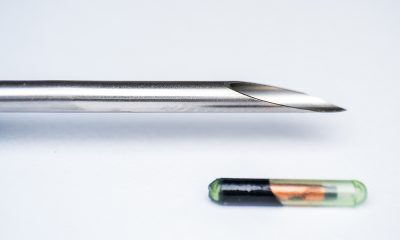
A microchip is a small device the size of a grain of rice that is inserted into the left side or center of the neck, covered by a biocompatible glass capsule and designed to last a lifetime. It is painless and imperceptible to the eye and contains a unique identification number along with our data to locate us (name, address, contact phone number, and email) if necessary.
The benefits of microchipping your pet
– The most important thing is that in case your dog or cat gets lost and someone finds them, they will only need to take them to a veterinarian to check if they have a microchip. If so, and by scanning it, the professional will only need to search the REIAC (Spanish Animal Identification Network) for the information stored on the device to contact you.
– If your animal gets lost but, on the other hand, is not so lucky and dies and is found by someone, the collection services would inform you of the event.
- A microchip is a way to legally recognize you as the owner. In divorces or thefts where there may be a dispute over the ownership of the dog or cat, it is essential to see what information the device holds to know who the legal owner of the animal is.
- In situations of abandonment where the owner disclaims responsibility, legal action can be initiated against the person responsible for it.
Combat abandonment by keeping microchip data up to date
According to a study published in 2020 by the Affinity Foundation “He would never do it” on animal abandonment and adoption during 2019 in Spain, around 306,000 pets were collected, and about 77% of these arrived without a microchip. If we delve deeper into these figures of unidentified animals, 72% of dogs and 96% of cats collected had no identification whatsoever.
The data is alarming, to say the least. Therefore, it is not only important to insist on the identification of our pets, but also to keep our residence and contact information updated. If we move, change our phone number, or even email, it is very important that we contact a veterinarian to report such an event and thus be able to modify the outdated information with the new data.
Many lost animals found in shelters, despite having a microchip, unfortunately have not been able to return to their homes due to their owners' carelessness. For this reason, the possibility of returning to their families drastically decreases, and they must remain in shelters with other dogs and cats who have suffered the same 'fate' and wait, in the best of cases, to be adopted by another family.
On the other hand, of those who did arrive at the shelters identified, around 70% were able to return to their families.

The mandatory nature of microchips and their price
In Spain, the mandatory nature of microchips depends on the Autonomous Community you are in. Currently, their use is mandatory in Andalusia, Cantabria, Catalonia, Galicia, and Madrid, while in the other communities it is only recommended. However, we must bear in mind that if we travel to an Autonomous Community where it is mandatory or if we go abroad, we would have to microchip them without exception.
It is essential that we are aware of the importance of correct identification. Some owners, especially of domestic cats, choose not to microchip their animal because they do not have access to the outdoors, regardless of whether it is mandatory in their Autonomous Community. Even so, it can happen that due to a domestic oversight (leaving the house door open, a window or balcony open...) the animal escapes and gets lost.
Furthermore, the identification of our pets does not have a high cost. Its price is approximately 40 euros, but the fine one can receive for not getting it if it is mandatory in the area where one is located, ranges from 500 to 6000 euros.
Other options that complement the microchip
There are other methods that do not replace the microchip but can help identify your dog or cat. Placing a tag on the collar with their name and owner's information is a quick way to see where a lost animal might have come from. It's important for cats, if you choose to use this accessory, that the collar is a breakaway one to prevent choking accidents (cats are more prone to getting caught in places they explore or climb).
QR code tags are another similar option. If you get one, you'll just need to pre-enter your pet's data and your own so that if they get lost, the person who finds them can scan the code with their smartphone and contact you.
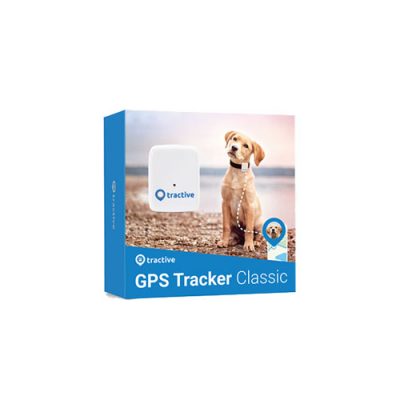
Another viable option is to place a GPS on the collar. With it, you can precisely see where your dog or cat is at that moment. Some are simpler, and others are more complete, even alerting you if your pet wanders too far from you.
At ARISTOPET, we give you a few options here.
Conclusion
Regardless of where it is mandatory, the benefits of correctly identifying our dog or cat are numerous. In case of loss, the chances of finding them are higher compared to when they do not have a microchip.
Some owners opt to equip their dog only with an identification tag due to the false belief that the cost of a microchip is high. It should be noted that although tags are a practical accessory for identifying an animal, it is not uncommon for them to get lost during a tug or play. With a microchip, however, that possibility does not exist.
Let's promote responsible pet ownership to prevent strays, combat abandonment, and relieve strain on shelters. Let's love our best friends well!