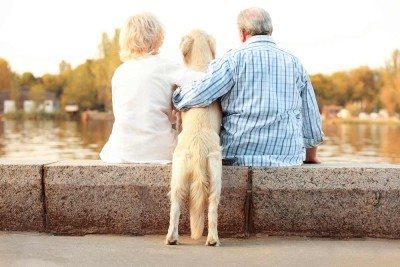
The number of Spaniards living alone continues to grow, year after year. In fact, in 2016, single-person households increased by 54,100, bringing the total to more than 4.6 million people living alone.
The profile of this group corresponds to older women, according to the latest data from the 2016 Continuous Household Survey, released by the National Statistics Institute (INE). Of the 4,638,300 Spaniards who live alone (10.1% of the total population), the majority are over 65 years old (41.7%), and of these, 70.7% are women.
Furthermore, Spain continues its aging process. According to data from the Continuous Census (INE) as of January 1, 2015, there were 8,573,985 elderly people (65 and over), representing 18.4% of the total population. And in turn, the proportion of octogenarians continues to grow.
In this context, it is very important to ask what role ARISTOPETS can play in all this. It has already been scientifically proven that living with pets is beneficial for health at any stage of life. And we also know that it is especially so during old age, as ARISTODOGS help combat memory loss.
Likewise, the WHO states that "health is not merely the absence of disease, but a state of well-being," and in that task, ARISTODOGS can help immensely. With this in mind, today we want to talk about which are the most suitable breeds to share their lives with elderly people.
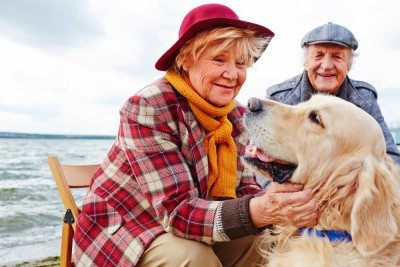
Generally, they should be small breeds, to make walking them easier and to avoid falls or tugs. Additionally, they should not require very complex care or a high level of activity. The College of Veterinarians of Madrid advises adopting a female, as they tend to be more affectionate, loving, and generally easier to handle. Let's look at the five most suitable breeds:
1. Yorkshire Terrier
With a nervous, active, and playful character, it's ideal for long walks. It is very affectionate with its owners but has a strong character that needs to be controlled so it doesn't take over the house. They tend to bark a lot when the phone or doorbell rings, when they hear the elevator or a neighbor... We could say they offer a lot of companionship.
They come in various sizes: from toy to four or five kilos. Their long, straight hair requires some dedication to brushing, bathing, and straightening, which is good for elderly people to maintain routines and continue to feel useful and responsible. Their most common problems are patellar luxations and tracheal collapse, which if not cared for can lead to bigger problems. To learn more about them, continue reading here.
2. Poodle
The poodle is athletic, calm, affectionate, and very intelligent. The perfect companion for elderly people who still lead active lives and whose physical condition still allows them to play a bit.
One of the biggest advantages of the poodle is that it doesn't shed hair: it grows quickly and continuously, preventing it from falling out in the home. So, it doesn't add extra work around the house. However, it does require frequent brushing, detangling, and haircuts.
They come in several sizes, toy, miniature, medium, and standard, which can weigh up to 30 kilos, so it is advisable to opt for one of the first two. Medical problems they present are patellar luxations and excessive hair accumulation inside the ear canal.
3. Pug
Also known as a pug, it has a peculiar beauty, with its flat snout and bulging eyes, and is liked by all audiences. Very friendly with people and other dogs, it has a very good balance between active and calm. Its short hair makes care easy, but as a good brachycephalic dog, it snores.
It's not a fan of long walks, especially in hot weather, as it doesn't breathe very well and can't endure them, but they do like to go outside and play. The most common health problems are tearing and skin allergies, along with knee problems.
4. Chihuahua
It is the ideal breed for those who live alone and cannot take their pet out often. With a calm temperament (though sometimes grumpy with strangers), it is very easy to take anywhere due to its small size: from going shopping to putting it in a travel bag and crossing the world by plane. They often have patellar luxation problems and their skin is delicate due to their short hair. Also, they don't tolerate cold well. Their diet also requires some special attention. We explain it to you here.
5. Pomeranian
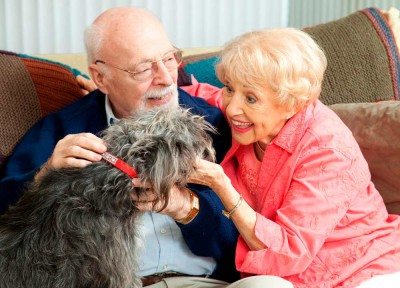
It has a similar temperament to the Chihuahua, but a very different appearance. Its long, silky hair makes it more complicated to care for due to its need for regular brushing and grooming. They suffer from joint problems and have very delicate paws. But they are pleasant and affectionate dogs, with whom an elderly person can feel very loved.
Due to their smaller size and low activity level, all these dogs also have lower nutritional needs than usual. They tend to be a bit delicate with food. They show a certain propensity to suffer from tartar accumulation problems on their teeth, something that can be prevented with proper dental hygiene, either through brushing, dental cleanings with the veterinarian, or with daily dental sticks.
Veterinarians recommend taking dogs out three times a day, with one of the outings lasting at least half an hour. But since they are small specimens, some ARISTOPARENTS decide to train them to relieve themselves in a specially designed area of the home, with papers, potty pads, or even soil, similar to cats. In this case, one daily outing for exercise and socialization might be sufficient, which undoubtedly can facilitate responsible ownership by an elderly person.