


Cats are very much their own. True free spirits who do not listen to reason, much less to orders. Some people tend to treat cats as if they were dogs, and that only generates frustration on both sides. Because cats, a priori, have no intention of obeying anyone. And because we interpret the fact that our cat "ignores us" in a very human way.
This means that, all too often, we become vassals to our cats. We do what they want without realizing it. They have us at their feet without needing to ask. And this, sometimes, ends up leading to behavioral problems on the part of our cat. Then come the orders, the rules... and with them, helplessness. Because it is very likely that our ARISTOCAT will completely ignore them.
The most important thing you should know
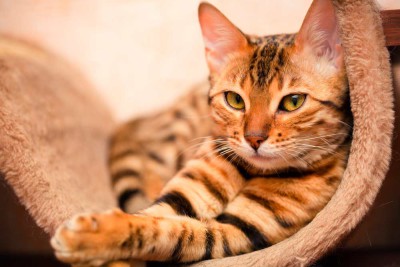
Cats, despite having lived with us for centuries, are still quite wild. Their level of domestication is different. Unlike dogs, cats do not constantly try to please us. They do not accept the premise that we are "their bosses," as a dog might think. In fact, they do not even accept the idea that there are bosses. And, in the words of biologist John Bradshaw, cats do not consider us a different species. "They think we are simply big cats." So their way of relating to us responds more to stimuli than to learned behaviors.
Therefore, according to researchers at Lund University in Sweden, it is necessary to try to understand the nature of cats. Only then can we understand how they work, what their logic is, why they do what they do, what they are trying to tell us... Only then can problems be solved.
What goals should we set... and what goals should we not?
Some people see their pet as an opportunity to impress others; to succeed; to gain popularity. And even to break records and win Guinness prizes, as is the case with Didga, the only cat in the world capable of doing 20 tricks in one minute. When our relationship with our cat is based on these kinds of things, we are prioritizing our goals, desires, and interests over those of our furry felines.
What we should do, in any case, is try to build a friendship based on making sure the cat is happy, comfortable, healthy, and relaxed. Because only when a cat is relaxed can it establish a good relationship with the other people or animals around it.
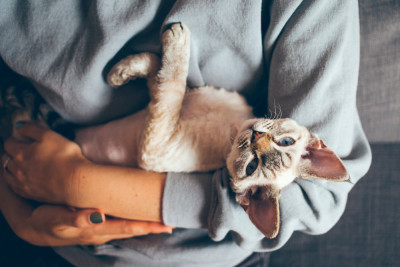
Five questions you should ask yourself if your cat suddenly changes its attitude
- Has there been a substantial change in your home recently? Such as the arrival of another animal, whether a dog or cat, or the birth of a baby. But also a renovation, a move... Because changes, however small they may seem to you, stress cats and create anxiety.
- What is the condition of their litter box? Does it have everything it needs? Is it always in the same place? Is it in a quiet and safe corner for your cat?
- Does your cat have the possibility to go outside?
- Has your cat recently suffered a traumatic episode? A fight, a punishment, an accident, a fright...
- Does your cat have everything it needs? Food, water, social stimulation... Is its environment sufficiently enriched?
How NOT to correct a cat's behavior?
Experts say that we should not punish our cat, under any circumstances. Far from what we might think, punishing our cat only contributes to creating a greater distance between it and us. This is because the cat does not understand why it is being punished (it doesn't matter if you explain it, it won't understand), but it does understand who is punishing it. It knows that perfectly well. So punishment can lead to an undesirable outcome: that the cat avoids you.
How to correct a cat's behavior?
The best way, according to experts, is based on a reward system. Food, toys, petting. When the cat does something that particularly satisfies us (for example: doing its business in its litter box, instead of outside it) we can reward it. In the long run, the cat will establish a connection between its action and the incentive, and it is more likely to continue behaving that way.
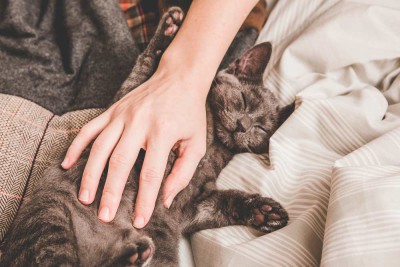
As we have said on other occasions, it is also very important to have a lot of patience, empathy, and a good attitude. We hope we have helped you to better understand your cat. If you have any tricks that work for you, share them with all the ARISTOPARENTS on our social networks.