


As we told you on another occasion, pets have been represented in art since prehistoric times. Because they are part of our family life and our culture. That's why one post is not enough to talk about pets in art. So today we are going to share with you more works featuring pets, as well as others where pets play an important role. All of them have made history. We hope you like them.
The Arnolfini Portrait
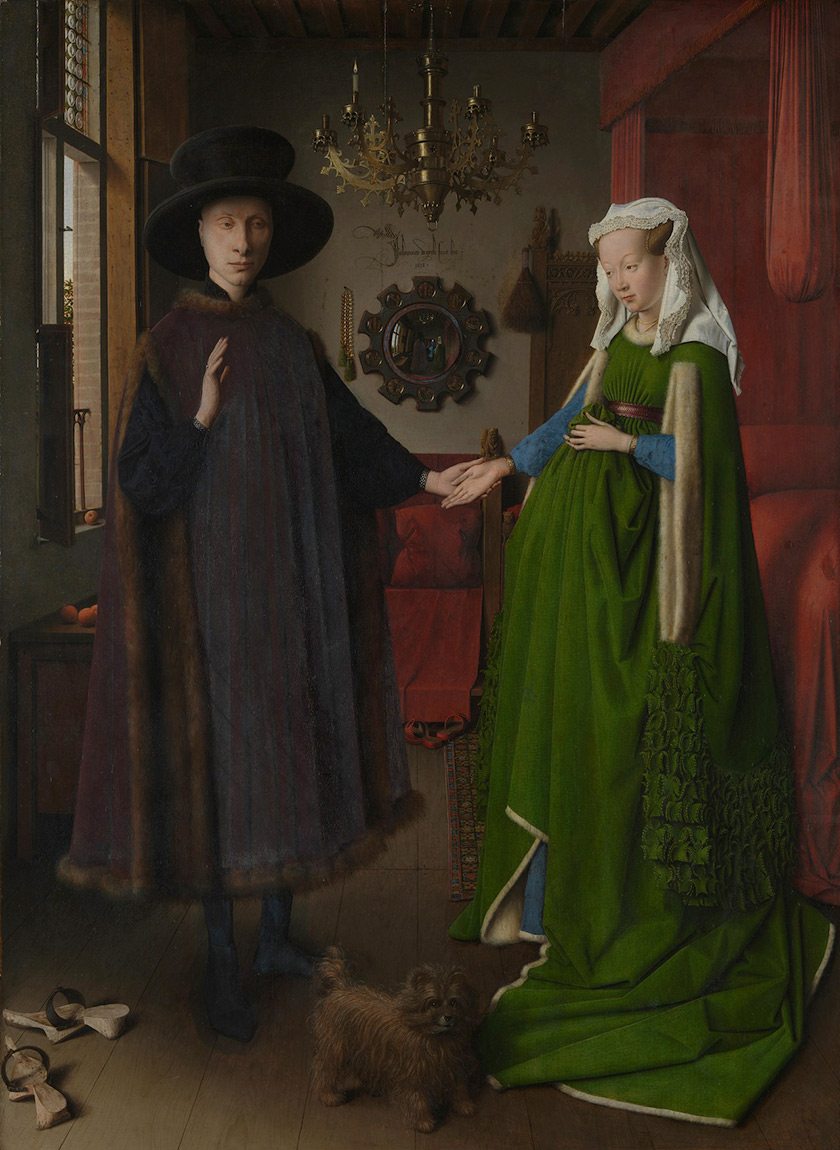
This is how Jan Van Eyck's work is popularly known, whose true title is "The Marriage of Giovanni Arnolfini and Giovanna Cenami". The work shows a moment of the wedding between an Italian merchant and the daughter of another merchant. The work has been analyzed (and continues to be) by experts from all over the world, because it is loaded with elements that, although they may seem casual to inexperienced eyes, are full of symbolism. The cute dog at the couple's feet is a good example of this. For the little terrier symbolizes companionship, fidelity, and love. Values that both the artist and surely the couple considered essential for a happy marriage.
The Rescuer Landseer
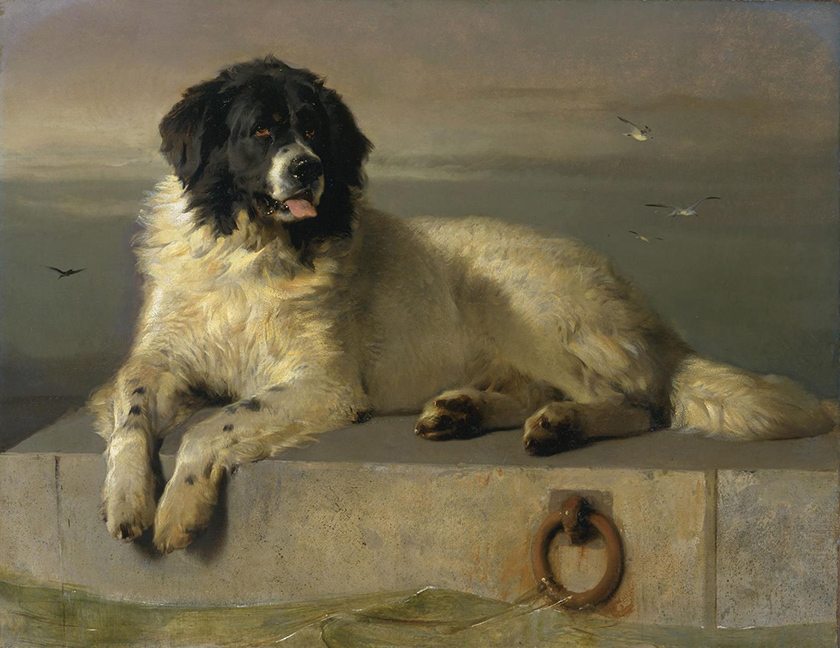
Sir Edwin Henry Landseer was a British painter, specializing in animal paintings. His most famous works, however, are the famous sculptures of the lions at the Horatio Nelson monument in Trafalgar Square, which many of you have surely seen. In this case, we wanted to share with you this impressive work in which he portrays a magnanimous Landseer (the breed's name is a tribute to the painter, who created many works featuring this beautiful dog, about which you can learn more by reading here). According to reports, he saved 23 people from drowning in the River Thames in London.
The Cavalier King Charles Spaniel
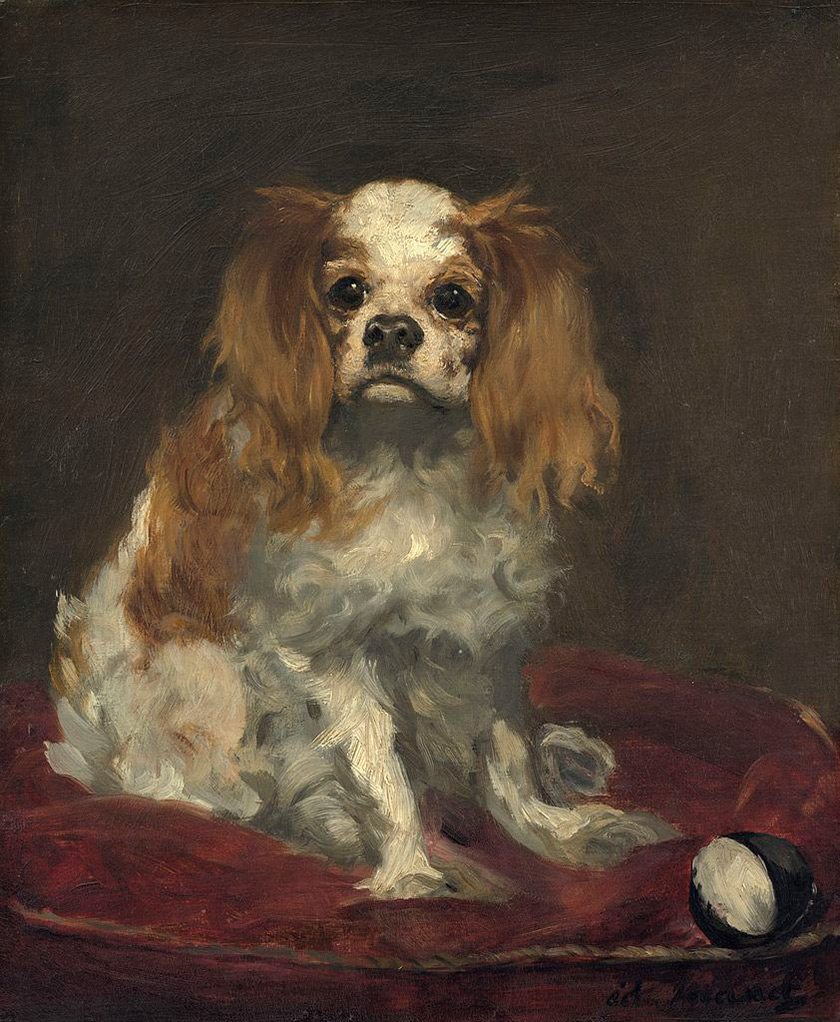
Edouard Manet, father of the Impressionists, painted this tender work in 1866, which is now in the National Gallery of Art. The protagonist is this beautiful Cavalier King Charles Spaniel. This breed is characterized by an active and cheerful temperament, despite the sobriety and slowness with which "the model" poses. Good boy!
Nude Boy with Cat
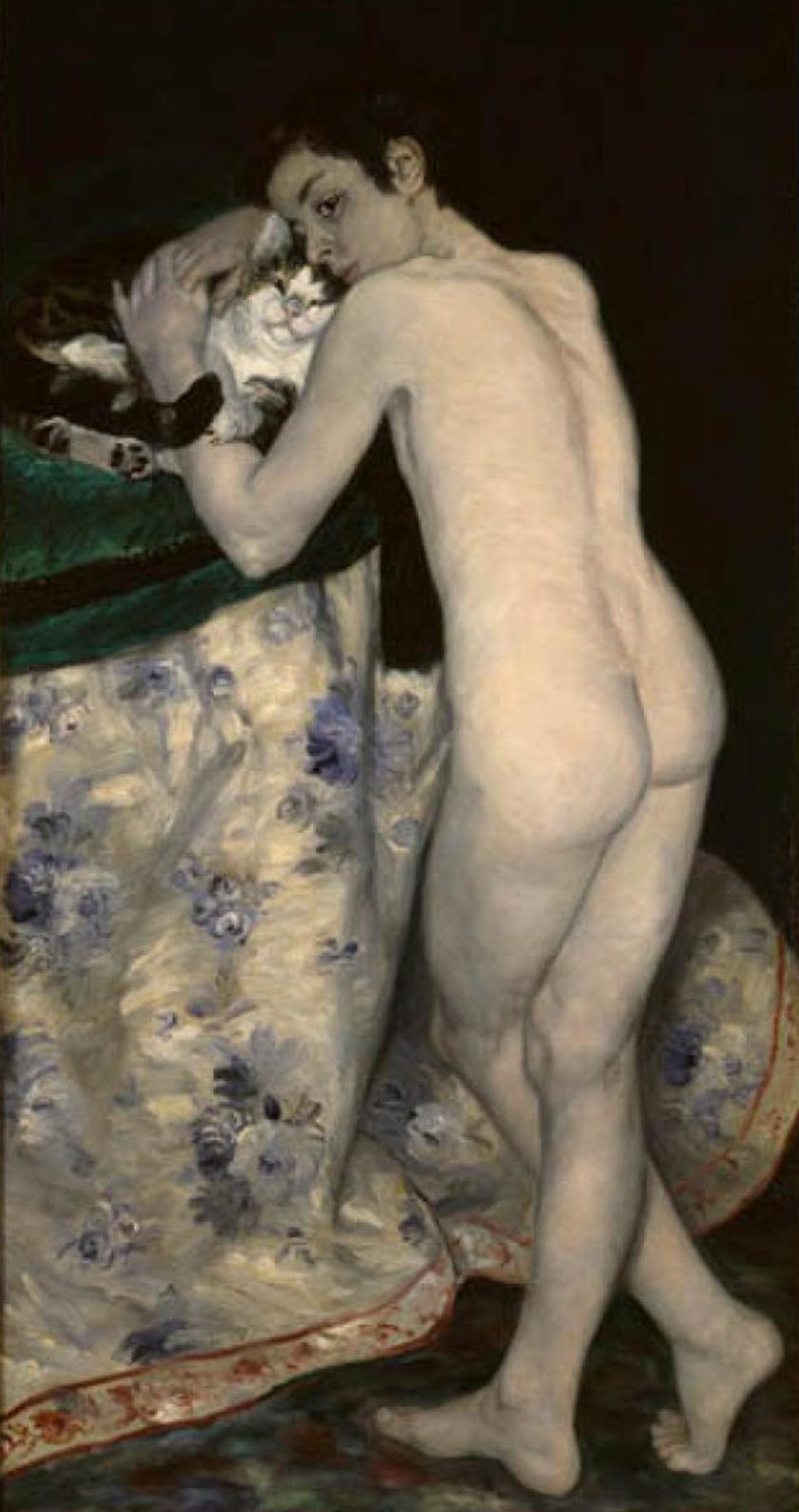
This work by Renoir, painted in 1868, is currently exhibited at the Musée d'Orsay. And it continues to intrigue those who see it because this male nude has no equivalent in the painter's work. The fact that the model's identity is unknown undoubtedly accentuates the sense of enigma it conveys. According to experts, for now it is ruled out that it may contain mythological references. Until more is known, we will continue to smile when we see that enormous cat (of unknown name, of course), letting itself be embraced lazily, as if it were a stuffed animal.
The White Cat
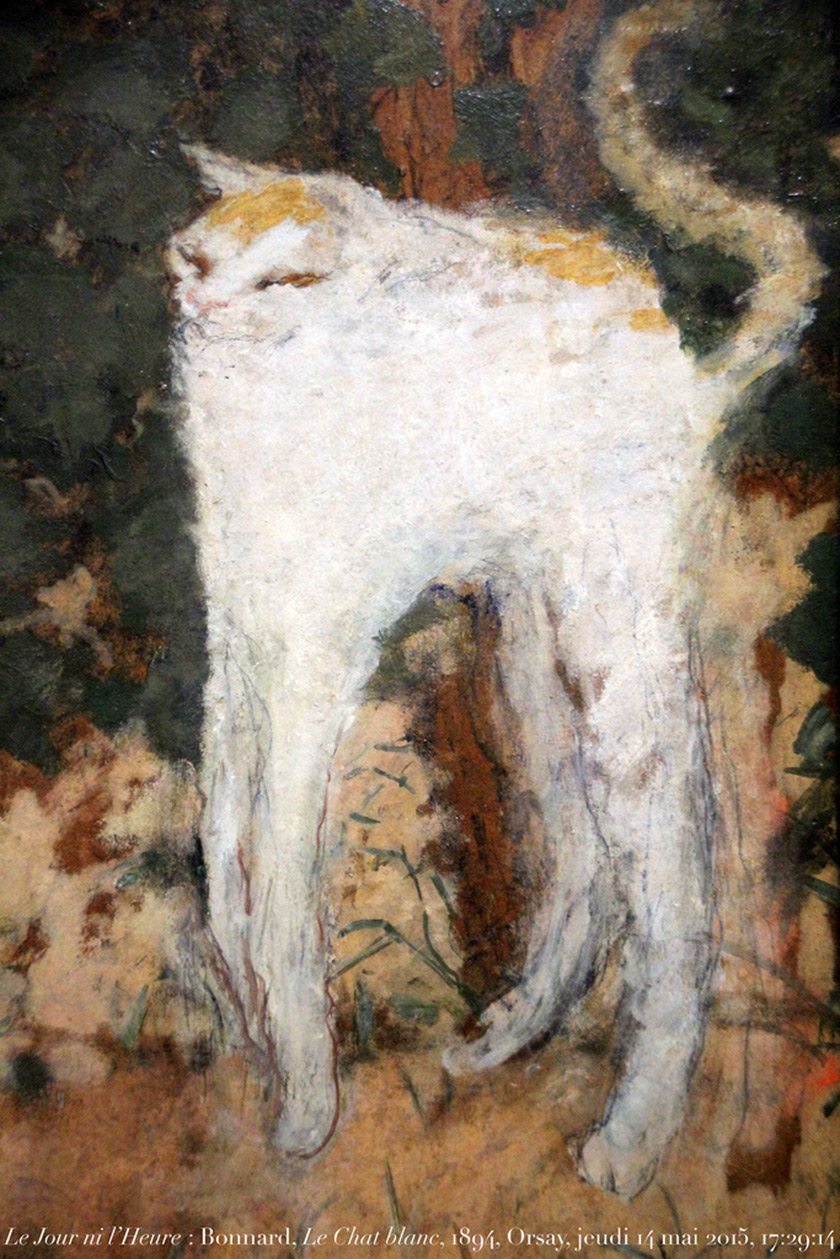
It must be admitted that this cat painted by Bonnard is somewhat strange: it arches its back excessively, its head is sunk, its eyes are furrowed, and it has a somewhat malicious air. But we like it a lot because the cat becomes a model and the artist allows himself to experiment, to explore his own pictorial capacities. In fact, the work is categorized within the "Nabi" style, and has a Japanese inspiration both in its daring, asymmetrical composition and in its theme.
Throughout his entire body of work, Bonnard painted countless canvases with cats, sometimes as a mere more or less visible detail, sometimes, as in this case, as the central theme.