Art is understood as an expression of artists' feelings. As we mentioned on another occasion, pets have been represented in art from prehistory to the present day. Artists represent them as part of their daily lives.
We have conducted an in-depth analysis throughout art history and have discovered a wide variety of artists who depicted pets in their works. Each artist and artistic movement represents ARISTOPETS in a very distinct way, even artists from the same era.
We invite you to discover how pets were painted in different artistic movements during the contemporary era. For this occasion, we start with the Impressionist movement.
Impressionism
This movement emerged in France in the late 19th century, characterized by breaking away from the rules established by the French Academy of Fine Arts. Its technique is characterized by the purity and saturation of color.
Édouard Manet
One of the main artists of this movement was Édouard Manet. Among his works, we can see several ARISTOPETS of royalty or influential people in society. For example, this small Cavalier King Charles Spaniel, which is characterized by its active and cheerful temperament.
Cavalier King Charles Spaniel (1866)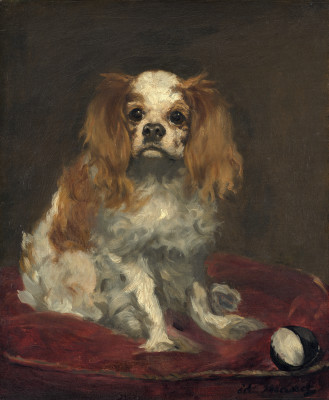
Or these beloved ARISTODOGS Douki and Bob. They are Brussels Griffon dogs. They are miniature dogs named after their city of origin. Within this breed, we can see dogs of different characteristics, size, and temperament.
Douki (1875)
Head of a Dog (1876)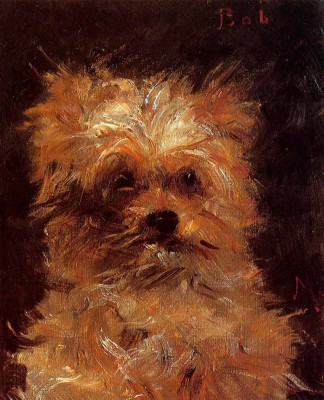
Tama, the ARISTODOG of an important Japanese banker, Henri Cernuschi. Her breed, the Japanese Spaniel, was considered exotic at that time in France. She was so peculiar that Manet was not the only painter to portray her.
Tama (1875)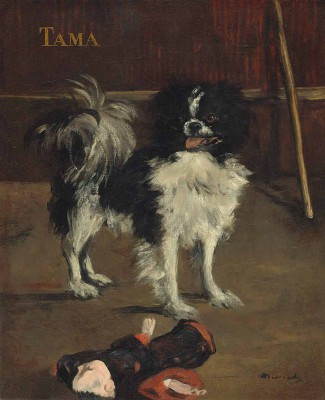
Other works by Manet featuring ARISTOPETS:
The Artist, Portrait of Gilbert Marcelin Desboutin (1875)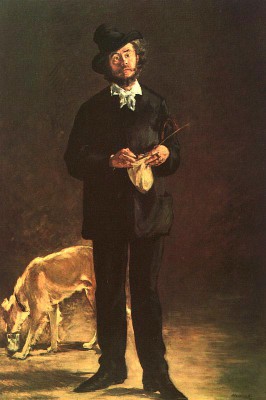
The Railway (1873)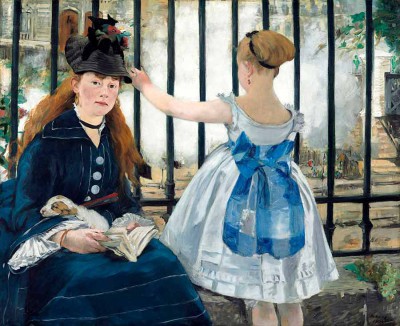
Claude Monet
Claude Monet painted his wife Camille Doncieux countless times. Here we can see her portrayed with a small Maltese Bichon. These ARISTODOGS are characterized by their friendly and sociable nature.
Camille with a Small Dog (1866)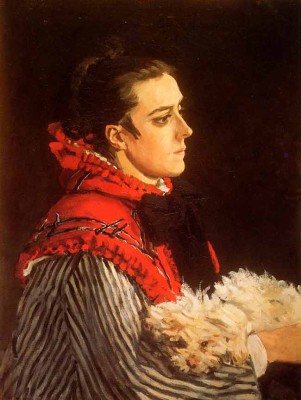
In this other work, we see Eugénie Graff, owner of an inn in Pourville, where the artist stayed for two months. He drew her with her dog, Follete, a Yorkshire terrier.
Portrait of Eugénie Graff (1882)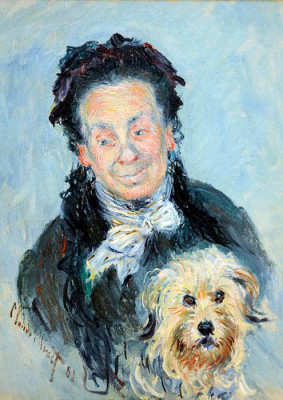
Another portrait with an ARISTOPET is that of the French naturalist and explorer, Victor Jacquemont, with his dog.
Victor Jacquemont with an Umbrella (1865)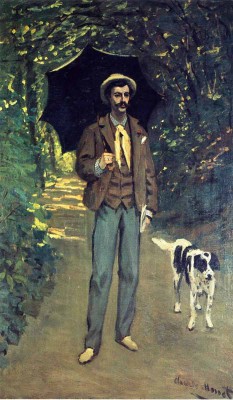
Auguste Renoir
As we mentioned before, Manet was not the only one to paint little Dama; the artist Renoir also portrayed her. Despite being two contemporary artists, we see clear differences in their artistic technique.
Tama, the Japanese Dog (1876)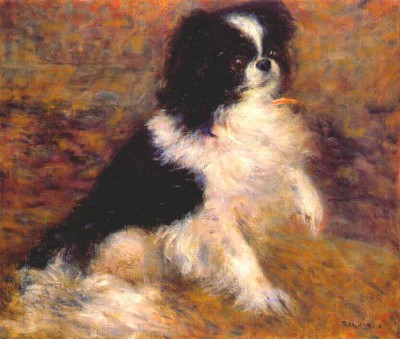
This artist is known for depicting everyday life scenes, dances, meals, walks in the park. in "Luncheon of the Boating Party", we can see a girl with her small terrier.
Luncheon of the Boating Party (1881)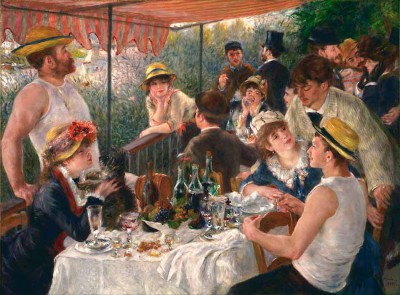
He also made several portraits of different ARISTOPETS, like this cat and dog.
Head of a Dog (1870)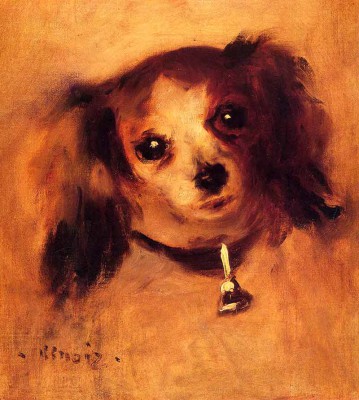
Sleeping Cat (1862)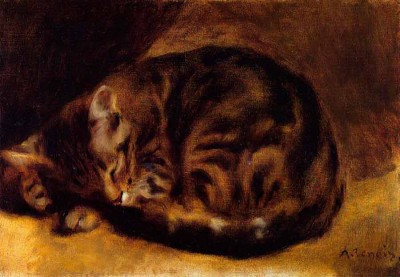
Other works by this artist with ARISTOPETS:
Woman with Cat (1875)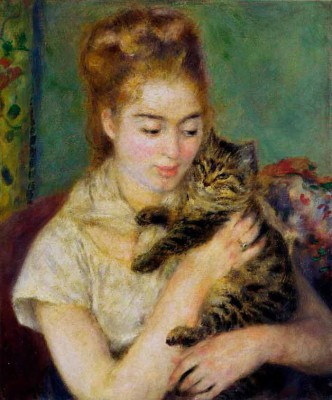
Edgar Degas
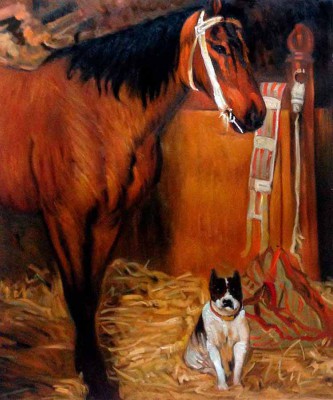
Although he was known for portraying ballerinas during their ballet classes or performances, we can also find works featuring animals, such as this painting of a horse and a dog in the stables.