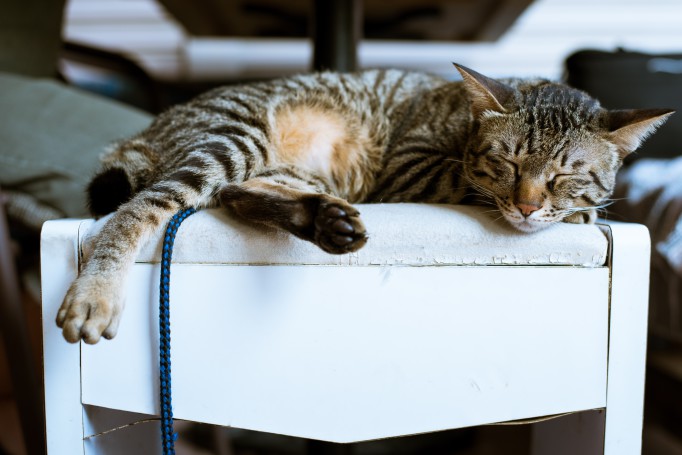
Those of us who share our lives with ARISTOPETS can't help but wonder what it would be like to be in their shoes. What they think, what they feel, how they interpret the reality around them, how they see us… We observe them intently, trying to imagine all of that, but it's difficult. It's well known that animals' senses are more evolved than ours.

In fact, ARISTOCATS' senses are light years ahead. Felines have sight and smell that is 14 times superior to ours. And as for hearing, they are capable of hearing 2 octaves higher than us. This means that their ability to receive noise is similar, however, they can pick up sounds that are minimal and insignificant. Noises or sounds that we can't hear at all because our eardrums, typically, have a dynamic range of approximately 60 to 100 decibels in the 10 Hz to 10 kHz range.
Dynamic range is the difference in sound pressure level that exists between the softest and loudest sounds we can hear. To give an example, a soft sound would be the fluttering of a butterfly's wings. And a loud one, a gunshot. Well, normally we are not able to detect the first, while the second we not only detect but find difficult to tolerate and can even damage the ear's protective mechanisms. Outside this frequency range, our hearing ability rapidly decreases. This is not the case for cats.
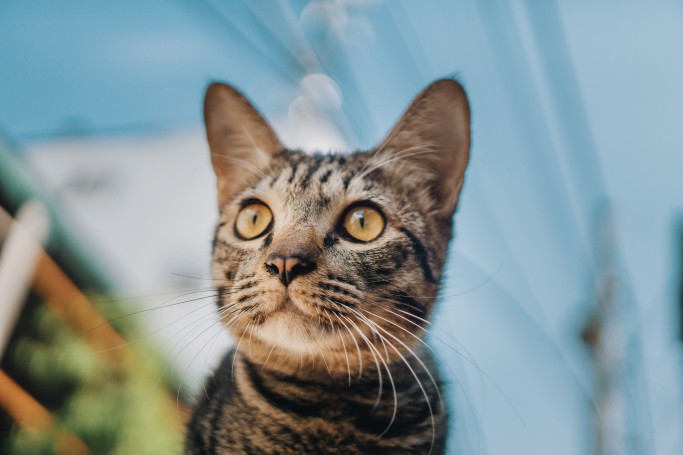
That's one of the reasons why it's so hard to catch cats off guard. You can walk carefully, even on tiptoes, around the house; you can speak softly… they always perceive it. Even before they see you or feel you near, they know you're there or that something is approaching. And they always anticipate what's going to happen. This peculiarity of their hearing helps larger felines in wild environments to be excellent hunters. Although in the case of our ARISTOCATS, this aspect is usually rather irrelevant, because all their needs are met.
Well, following this, researchers in Cleveland (Ohio, USA) are developing a device that will allow us to hear as cats do. This device, they explain, is ten trillion times smaller than the human eardrum. In other words, it's made at a nanoscale. It's imperceptible. In fact, the device is shaped like a patch and is made of atomic layers of semiconductor crystals, so it's extremely thin. The novelty is that it can receive and transmit signals that only felines can pick up.
Although this device is intended to be part of what scientists call "transducers" (devices capable of transforming or converting an input energy manifestation into a different output), it's inevitable to imagine what would happen if it were to be commercialized. We could put ourselves in the ears of our cats. Understand them, always be alert like them. It would undoubtedly be an experience that would allow us to get to know them better and, by extension, to take better care of them. However, it seems we will have to wait (hopefully not long). Until then, we will keep you informed.