


ARISTODOGS have a sense of smell between 10,000 and 100,000 times superior to ours. In fact, it is estimated that they have between 200 and 300 million olfactory receptors. Therefore, smell is the main sense of dogs.
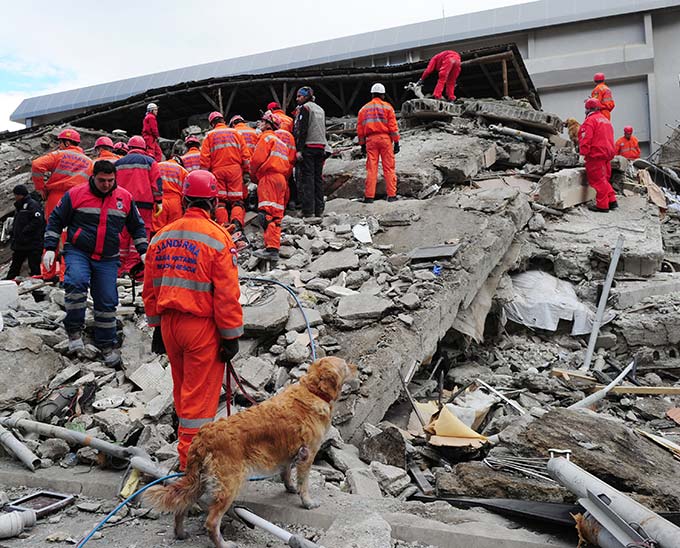
When a dog is focused on a smell, it puts all its attention on it to obtain the maximum information. That is why dogs are excellent trackers and have become an essential aid for certain professional groups (firefighters, police...), as well as in certain scenarios where a catastrophe has occurred (floods, earthquakes...). A dog can follow a trail and isolate a smell among others. This allows them to track drugs, explosives, gas leaks; find survivors under rubble, water, mud... and, for some time now, also detect diseases.
According to studies published by DVM News Magazine, a group of researchers has been able to demonstrate that, through their sense of smell, trained dogs were able to recognize prostate cancer in human urine. It has also been shown that they are of great help in knowing when a patient is about to have a hypoglycemic attack (low blood sugar), even before the patient himself.
The latest case, which has amazed us and which we think is worth sharing with all of you, is CancerDogs. An experimental project that trains beagles to detect cancer cases in different fire departments.

Why with firefighters?
Basically because firefighters have higher rates of cancer than the general population, as they are daily exposed to chemicals due to the flames and smoke from the fires they try to put out.
The group of five beagles began training in Canada in 2010, according to CancerDogs president Glenn Ferguson. A year later, they began the experimental phase (in which they are currently still), with the detection tests.

How is cancer detected with dogs?
Firefighters breathe for ten minutes with a special surgical mask that is impregnated with their breath. Subsequently, the dogs sniff each of the samples and, if two or more detect a positive, the sample in question undergoes a second test in the same way. If the result is confirmed in this second test, the affected person is informed to send another sample and, if they get a positive result again, the center recommends that the possible patient visit a specialist.

Most of the cancers discovered by the dogs have been skin cancers, although there were also a couple that involved vital organs. The department in the northern Texas city requested 450 detection kits for its firefighters and family members who wanted to undergo the tests, from which 10 people with early-stage cancer were eventually detected.
The tests are very competitive in terms of price, but also in terms of speed. As a result, thirty other fire departments have participated in this project in the last five years. For example, those in Dallas, Denton, Arlington, San Marcos, and San Antonio.
Without a doubt, it is a commendable initiative that can help both prevent and save many lives. And it demonstrates, once again, that ARISTODOGS are not only our best friends, but also, in many cases, our guardian angels.