


For years we have been seeing them in Japanese restaurants, in Chinese restaurants, but also in bazaars and, in general, in Asian establishments that we find in Spain (not to mention what we would see in their country of origin, of course). That colorful cat that waves incessantly, without pause, mechanically, but also with a certain tenderness. Over time, it has become such a familiar object that many people have acquired one to have at home, at work... And it is that "Maneki Neko", the Japanese good luck charm, has spread throughout the world. But what do we know about it?
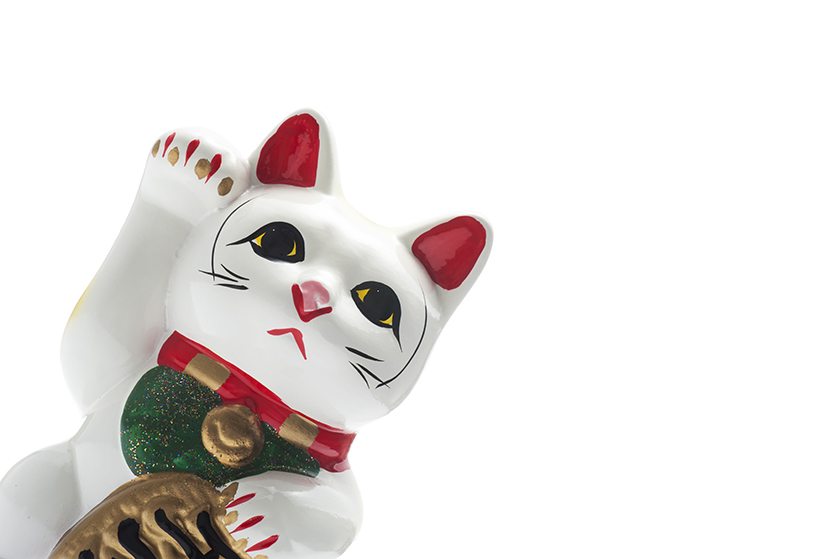
There are many legends that speak of its origin. One of the most popular tells the story of Tama, a tricolor Japanese bobtail cat who invited a wealthy feudal lord to take refuge in a ruined Buddhist temple. It was raining heavily and the cat attracted him, of course, by waving its paw. The lord approached the temple and met the only remaining priest. They became friends. And from then on, they never lacked food, neither he nor the cat.
First of all, its name stands out: "Maneki Neko". Also known as the fortune cat or the waving cat. "Maneki" comes from the Japanese verb "maneku", which translates as "to invite in" or "to wave"; but it is also a cat that beckons because in Japan, greetings are not made with arm movements, but by bowing the body forward, as a sign of reverence. "Neko", as you can imagine, means cat.
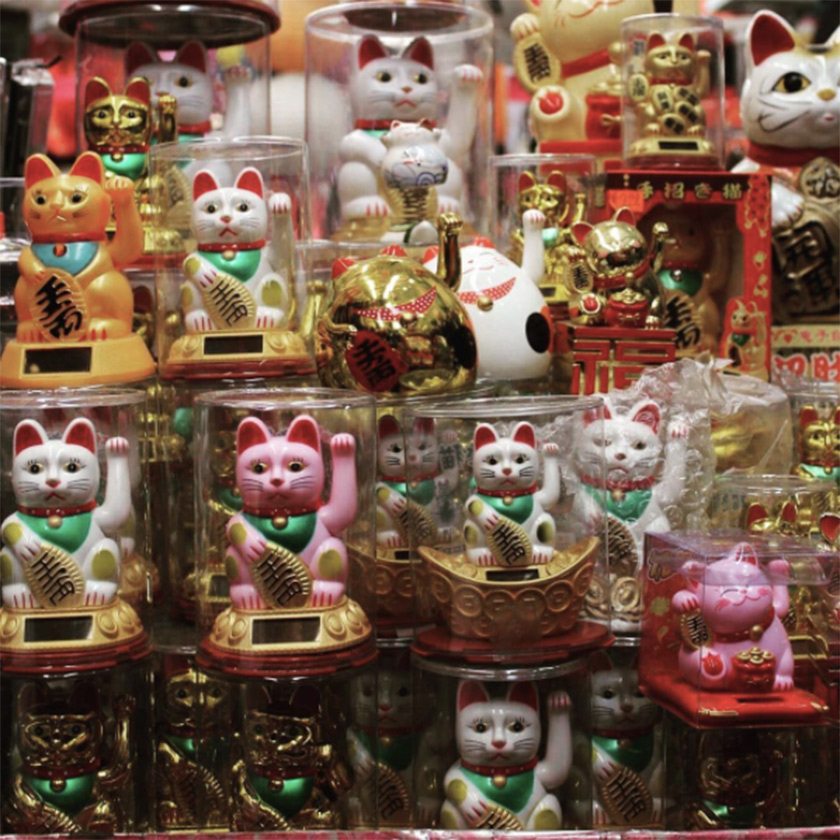
Maneki Neko is characterized by always being seated and also by having one paw raised. If it's the left paw, the cat's greeting is meant to attract customers. If it's the right paw, its intention is to attract prosperity, money, as we generally say, good luck. In some cases, less frequently, we can find the friendly cat with both paws raised, which adds a "protective" component to the space where it is located, in addition to those mentioned above. It is said that the higher the paw, the greater its ability to attract luck, customer traffic, in short, prosperity for the establishment.
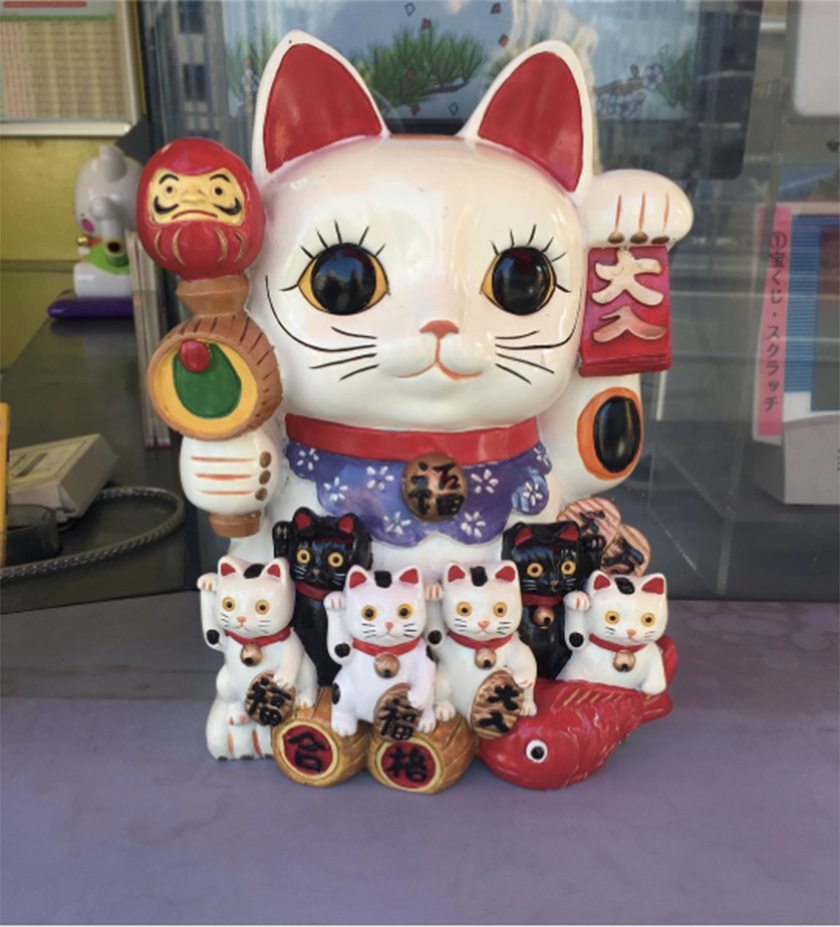
A small bell hangs from the Maneki Neko's neck, which is supposed to ward off evil spirits, while in the other paw it traditionally holds an oval gold coin from the Edo period called a koban, a symbol of fortune and prosperity.
Like any amulet, color is very important. And it has its own connotations. If it is a tricolor cat (black, white, and orange), it aims to achieve the greatest possible luck. It will attract health; if it is blue, it will help to fulfill the dreams its owner has; if it is red, it wards off dangers and attracts sentimental success; if it is black, it prevents bad luck and increases happiness. Finally, if it is pink, it allows you to choose the person you marry, something that in Spain we may not see much use for, but in countries where family agreements leading to arranged marriages are still practiced, it can be almost vital.
Today, in addition to the traditional figure, the Maneki Neko is present in all kinds of merchandise, from t-shirts to mugs, phone cases, plush toys... and of course, also in tattoos and art.
Undoubtedly, the figure of the Maneki Neko and its ancient tradition demonstrates the importance that "aristocats" have in our culture, globally, in our society, and in our lives for many, many years. And many more to come! If you want to know a little more about fortune cats, keep reading here.