


The debate about so-called "potentially dangerous dogs" is always present in relation to what responsible ownership entails and whether everyone is prepared to own a dog with these characteristics.
This debate is not just a national issue; it also occurs internationally. In most cases, governments do not reach any conclusions. But recently, we received inspiring news from the Netherlands, where the government has concluded, after a tragic accident, that it is necessary to educate owners.
So, starting in 2018, anyone who wants to buy or breed potentially dangerous dogs will have to take a mandatory training course to teach them. Without proper attention, all these dogs are considered high-risk to the community by the Dutch government, due to their strength and resilience. Martin van Dam, Secretary of State for Economic Affairs, announced the measure, which includes a register of attacks. He warns that "local councils must be alert and apply the new regulations, although the essential thing is for owners to be responsible with their pets."
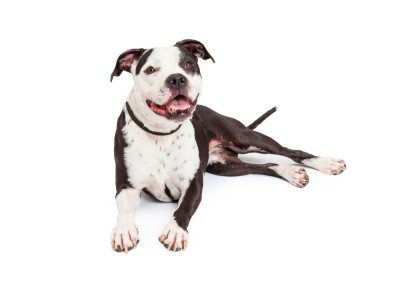
As it is always said, the problem is not with the dogs, but with the owners. A dog is not, by itself, bad or violent. It does not have destructive tendencies. It can be strong, large, imposing, but its natural instinct is not to harm. In fact, many of them live in families and are loyal, affectionate, and adorable. Surely many ARISTOPARENTS can attest to this. The problem is that, unfortunately, many breeders and owners do not teach them correctly—perhaps not due to lack of willingness, but due to lack of knowledge and adequate training. Also, unfortunately, others train them to be aggressive (for example, the American Pit Bull Terrier was originally bred for fighting). But the fault is not with the dogs, but with the treatment they receive and the use they are given.
Hence, the Dutch government has decided that, from now on, anyone who wants to own a dog with these characteristics must be trained, prepared, and have the appropriate knowledge. This is to ensure the safety of society and meet the emotional and cognitive needs of the dog. This idea has been well received by Dutch society. And perhaps it should be taken as a reference. Because… what does Spanish legislation say about owning potentially dangerous animals?

Law 50/1999, of December 23, on the legal regime for the ownership of potentially dangerous animals, addresses the regulatory framework regarding the ownership, training, and handling of potentially dangerous animals, to preserve the safety of people, property, and other animals. The most important requirements to obtain this administrative license, which is valid for five years, are:
a) Being of legal age.
b) Not having been convicted of crimes of homicide, injury, torture, against freedom or moral integrity, sexual freedom and public health, association with armed gangs or drug trafficking.
d) Having physical capacity. This implies: visual and auditory capacity; the locomotor and neurological system; perceptual-motor difficulties, decision-making, or any other condition that may imply a physical incapacity to guarantee control of the animal.
d) Having psychological aptitude. This implies not suffering from mental and behavioral disorders; psychological difficulties in evaluation, perception, and decision-making, and personality problems or any other condition that limits the full exercise of necessary mental faculties.
e) Having civil liability insurance for damages to third parties with coverage of no less than €120,000.

It mentions the safety measures that the person who drives them and carries the administrative license must comply with. Namely:
1. Be properly identified with a microchip and registered in the Municipal Register of potentially dangerous animals.
2. Obligatorily wear a muzzle appropriate for the breed type.
3. Be controlled with a non-extendable chain or leash less than 2 meters long.
etc. But, as you can see, nothing mentions courses or specific training to properly care for, attend to, and control Pit Bull Terriers, Staffordshire Bull Terriers, American Staffordshire Terriers, Rottweilers, Dogo Argentinos, Fila Brasileiros, Tosa Inus, and Akita Inus.
How long will we have to wait to follow the example of the Netherlands? Although it is not the only country from which we have much to learn. Portugal is a great example of this.