


One of the great benefits pets bring to families or homes is happiness. Pets exude happiness, not by what they say, because they can't talk, but by how they act. They are always attentive to their owner, they keep them company, and they never leave them alone. As María Martínez, an ethologist veterinarian, told us, "pets are an unconditional support for their owners".
Ultimately, this happiness is reciprocal. Every owner seeks the happiness, care, and above all, the health of their pet; they want them to feel like the king of the house. Therefore, no one likes it when their dog or cat gets sick.
Imagine you're relaxing at home, and suddenly, you notice your dog starting to convulse, and you don't know what's happening. This is exactly what happened to Goyo, owner of Golfo, a seven-year-old Border Collie. Golfo has suffered from epileptic seizures since he was three years old.
Golfo's Story
“Golfo was three years old when he had his first spasm,” Goyo tells us. “I was very scared; it’s something you never expect,” he continues.
No disease is better than another, because in the end, they all scare and frighten you. Especially when it happens to a loved one. In the case of animals, who cannot speak, you often don't know how to help them.
We spoke with Goyo, Golfo's owner, to tell you what the daily life of a dog suffering from epileptic seizures is like.
Golfo has suffered from epileptic seizures since he was three years old, but luckily, according to his owner, they only happen occasionally; it's not a continuous thing. The first time he had one was at three years old, and it didn't repeat until a year later.

However, six months ago, he had another, bigger one, and it repeated itself very quickly, so Goyo decided to take him to the vet.
“I decided not to give him any medication, because they only happen very occasionally. If they happened more often, I might change my mind. For now, I've had him castrated, which was one of the things the vet told me, and he's only had one seizure since then,” he tells us.
When a dog is excited or has exerted itself greatly, that is one of the moments when it can have a seizure. That's why Goyo decided to neuter him to lower his excitement level, and since then, he has been calmer. "Sometimes when he has a seizure, it's when he chases rabbits in the field or runs a lot," he explains.
How does Goyo act when he has an attack?
“When we are with him, we cover him with a damp towel and lay him down. We try to have as little light as possible, so we turn off the lights and give him a Valium shot to relax him,” he tells us. “The seizure lasts about 10 minutes,” he details.
Unlike humans, dogs cannot choke or swallow their tongues; the only thing is that if they fall, they could get a strong blow or bite their tongues. Therefore, the seriousness of the matter is milder.
Goyo doesn't know what the cause of Golfo's epileptic seizures might be, because to find out, he would have to undergo an MRI. And for now, he doesn't want to make that decision, as it could pose certain secondary risks to Golfo, since MRI for dogs is different from that for humans. Although, some of the possible causes he's been told are that he suffers from a brain malformation or that something bit him and he has a blood clot.
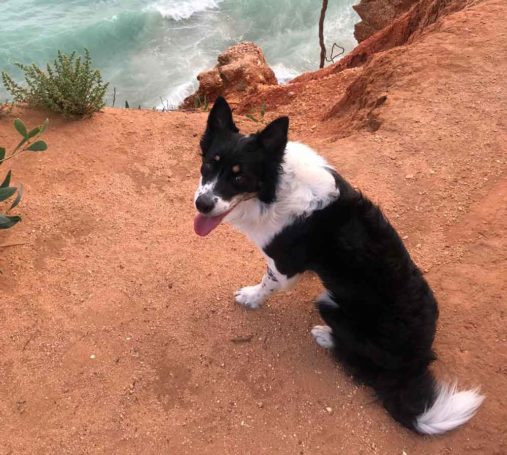
Nevertheless, despite this, “Golfo is happy and leads a normal life; being a Border Collie, he needs a lot of activity. He loves the beach and enjoys it. His life hasn’t changed despite having epilepsy, because the seizures are very mild,” he emphasizes.
Goyo explained to us that it's true he gets very scared, but as long as he sees his dog is happy, he will always be happy too. When these things happen, we always recommend going to the vet. They will always help you and want the best for your pet.
What do you think of this story? Tell us about your experience on social media.