


The earliest traces of the Scottish Fold date back to 1897, when Professor Charles Cornevin, in his Treatise on General Animal Husbandry, spoke of cats with pendulous ears and short hair, which were fattened for domestic consumption in China, as dictated by the—terrible—culture of the time.
Years later, in Scotland, a spontaneous mutation was observed for the first time that caused a forward fold of the pinna in felines. This mutation came to be called "Folded ear" and, subsequently, gave the breed its name. This mutation was related to certain genetic abnormalities in limbs and tail, so breeding slowed down and attempts were made to mitigate it by crossing with other breeds.
These problems still occur today. And they are already accepted by American organizations such as TICA or CFA. In fact, in the United States, crossing the Scottish Fold and the Persian allowed for the creation of a semi-longhair variant called Highlands Fold or Scottish Fold Longhair. But in Europe, FIFE or GCCF do not recognize the Scottish Fold. This is why it is a popular cat in the United States, but relatively rare on our continent. That's why we want to give you the opportunity to get to know them better.
What are Scottish Folds like?
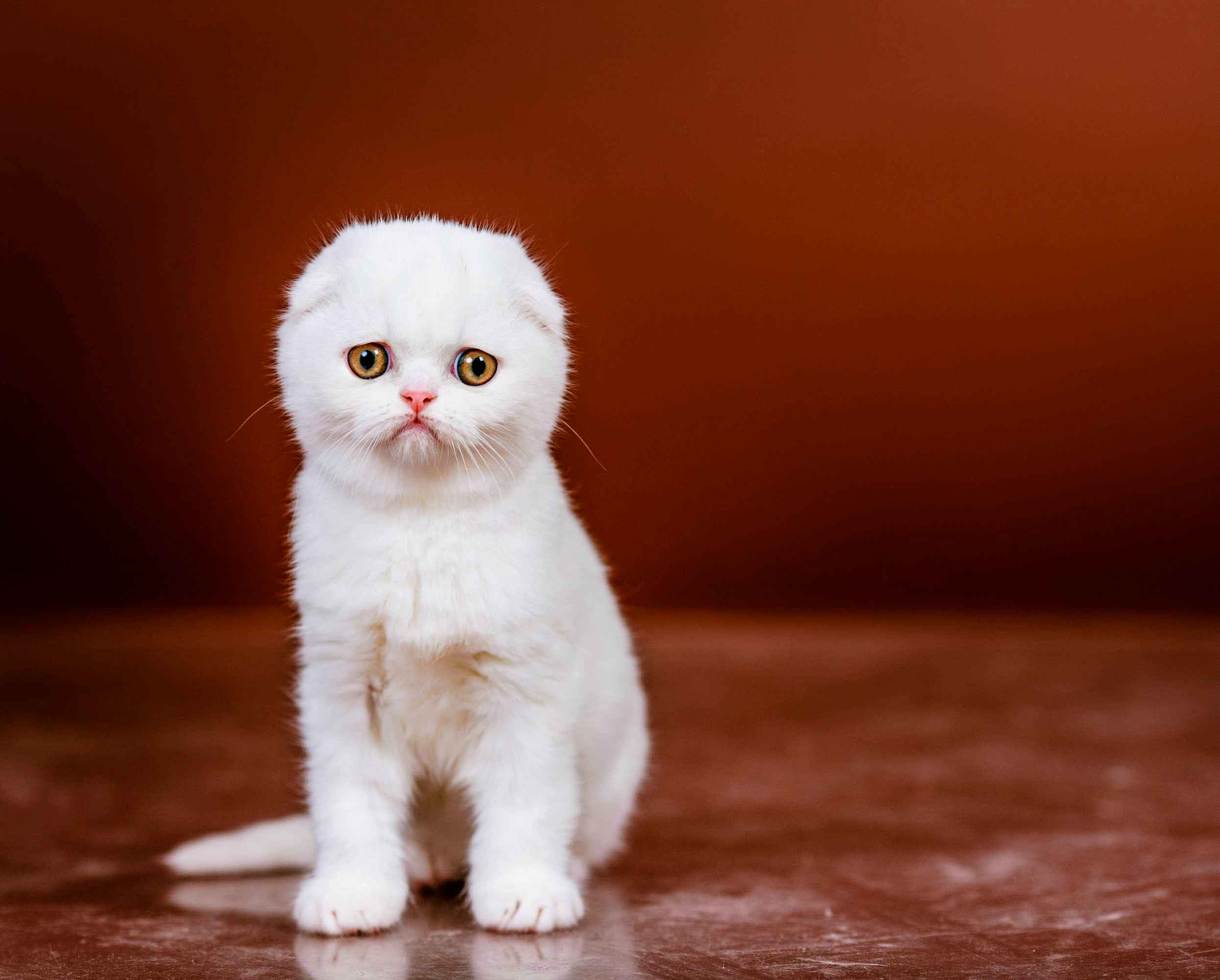
The Scottish Fold is a robust and muscular cat, chubby in appearance, with a round and compact head, and a slightly curved profile. Adult males may have slightly pendulous jowls.
Their most significant feature is their ears, which are small and gracefully and strangely folded forward, like a cap. This undoubtedly contributes to increasing the peculiarity of this beautiful ARISTOCAT.
In litters of this breed, kittens with straight ears, instead of folded, can also be born. These specimens are essential for breeding and for the survival of the breed, as two cats with folded ears cannot be crossed with each other because this only causes more severe genetic deformities.
Scottish Folds' eyes are large and round, and quite far apart. Their fur can be short or semi-long (Highlands Fold), but it is always thick, dense, and very soft. Petting them is a pleasure! There are specimens of all colors, except chocolate or following the Siamese pattern.
How do Scottish Folds behave?
Scottish Folds are calm and sociable, both with other cats and with other animals. In general, they are sweet, affectionate, very playful, family-oriented, discreet, and not very dominant. They adapt easily to new environments and fully trust humans. Their meow is almost as soft as their fur. For this reason and because they are adorable, a Scottish Fold can be a perfect life companion.
How to care for Scottish Folds?
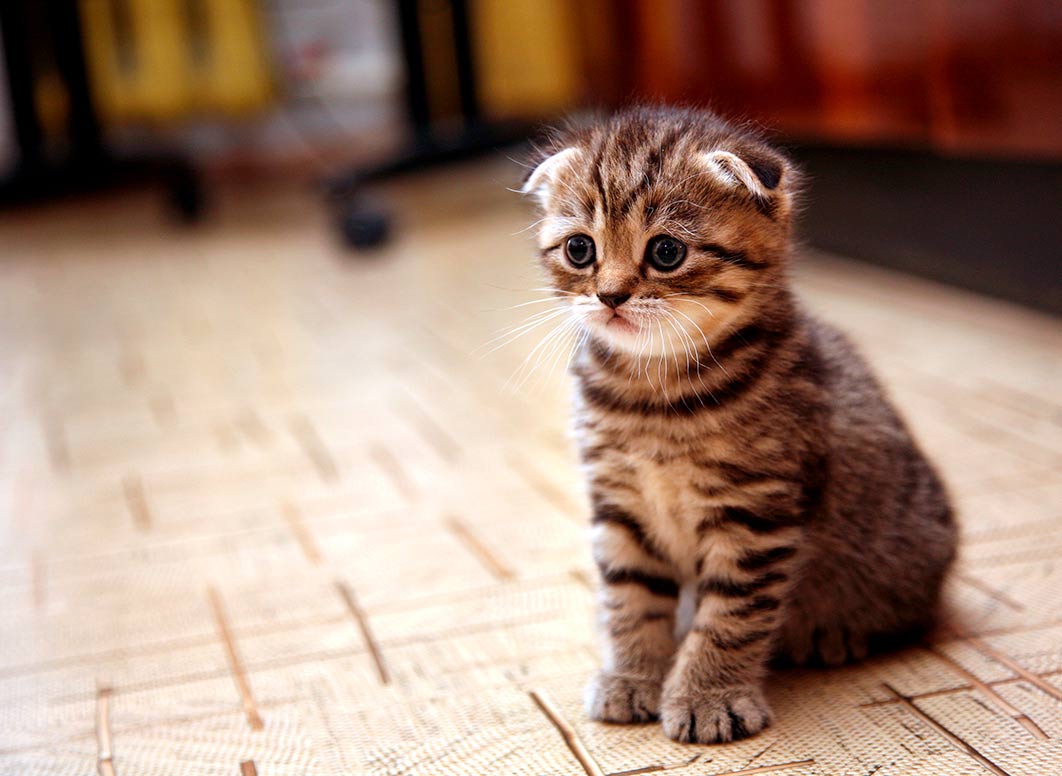
The particularity of their ears is, at the same time, what requires the most attention and care. The fold requires more monitoring than in a normal cat, as they are at greater risk of infections and inflammation. At the slightest doubt, it is best to consult a trusted veterinarian.
As we said before, two folded-ear Scottish Folds should not be bred together. Crosses must be made with straight-eared Scottish Folds. The ears fold from the third or fourth week of life, and the degree of folding is evident from the fifth or sixth week.
Otherwise, thanks to their extraordinary character, it is easy to keep this ARISTOCAT happy and balanced. Just give them lots of affection and enrich the home environment, as we explain here.
We hope that after getting to know Scottish Folds, you'll like them as much as we do. If you're eager to learn about more ARISTOCATS, we introduce you to the Ragdoll and the Maine Coon.