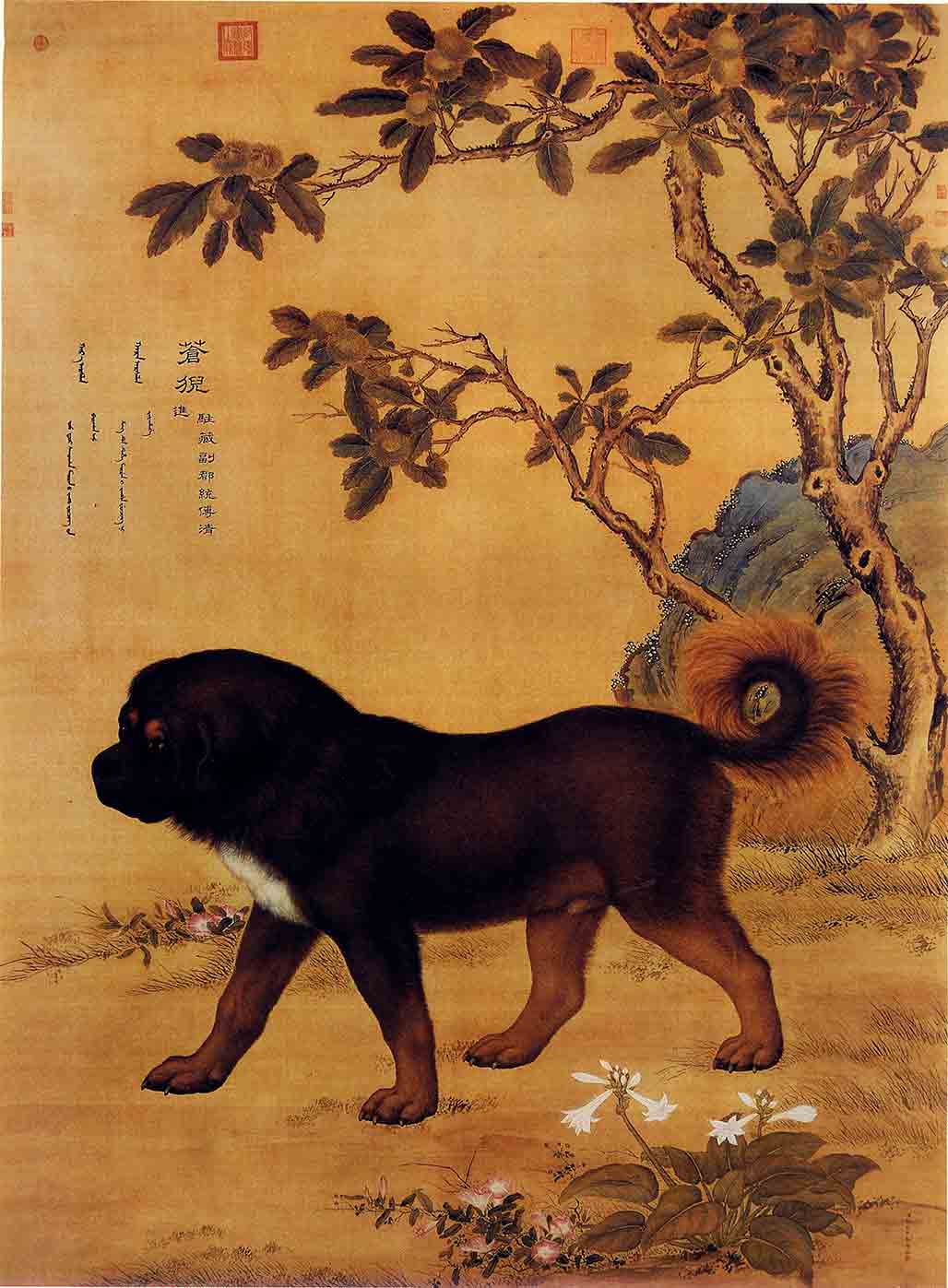
Today, in our section dedicated to pets in art, we want to make a special mention of Giuseppe Castiglione, an Italian Jesuit missionary and painter, creator of the impressive series "Ten Fine Hounds". A series that we love, most of which can be seen at the National Palace Museum in Taiwan, and which reminds us of the role that ARISTODOGS have played in our lives for centuries.
For those unfamiliar with him, Giuseppe Castiglione was born in Milan in 1688. He learned to paint at a very young age, in the renowned Botteghe degli Stampatori studio, influenced by Andrea Pozzo, a well-known Jesuit muralist.
At 19, Castiglione entered the order and eight years later embarked on a sailing ship that would take him from Italy to China, on a life-changing journey.
He arrived in Beijing in 1715, at a time of maximum Jesuit influence, when members of the order were among the most valuable and trusted advisors to the Chinese emperor. They held prestigious positions in the imperial government and worked as mechanics, musicians, painters, instrument makers...
With the ascension of Emperor Yongzheng in 1723, fortune smiled on Castiglione. He received his first imperial commission: a work that would later be titled "One Hundred Horses." A work to which he dedicated five years and which earned him the honor of being named chief painter of the emperor's court.
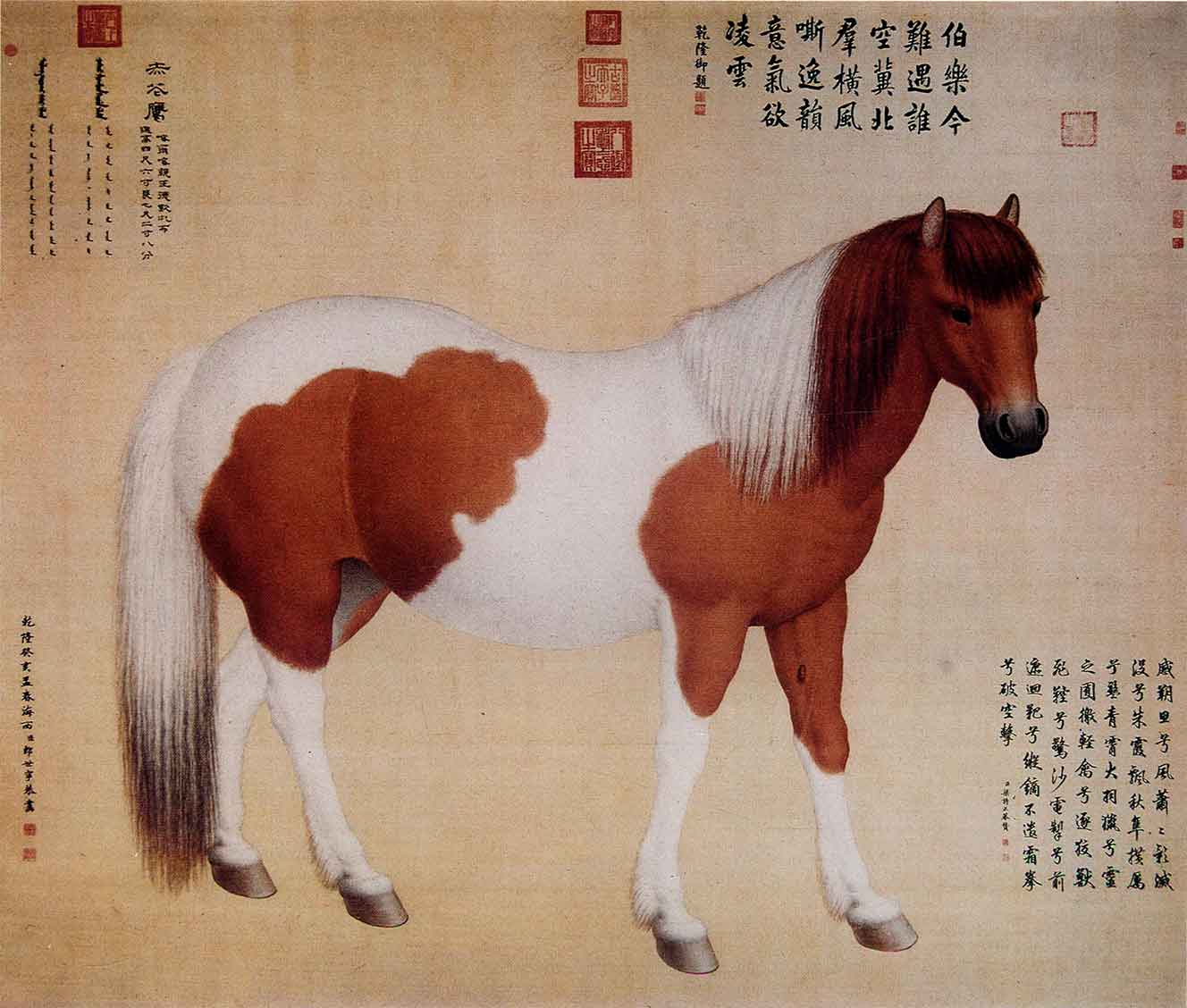
Castiglione immersed himself fully in Chinese culture. He adopted the name Lang Shi’ning and adapted his European painting style to Chinese themes. In fact, he created a new hybrid approach that combined Western realism with traditional Chinese compositional conventions.
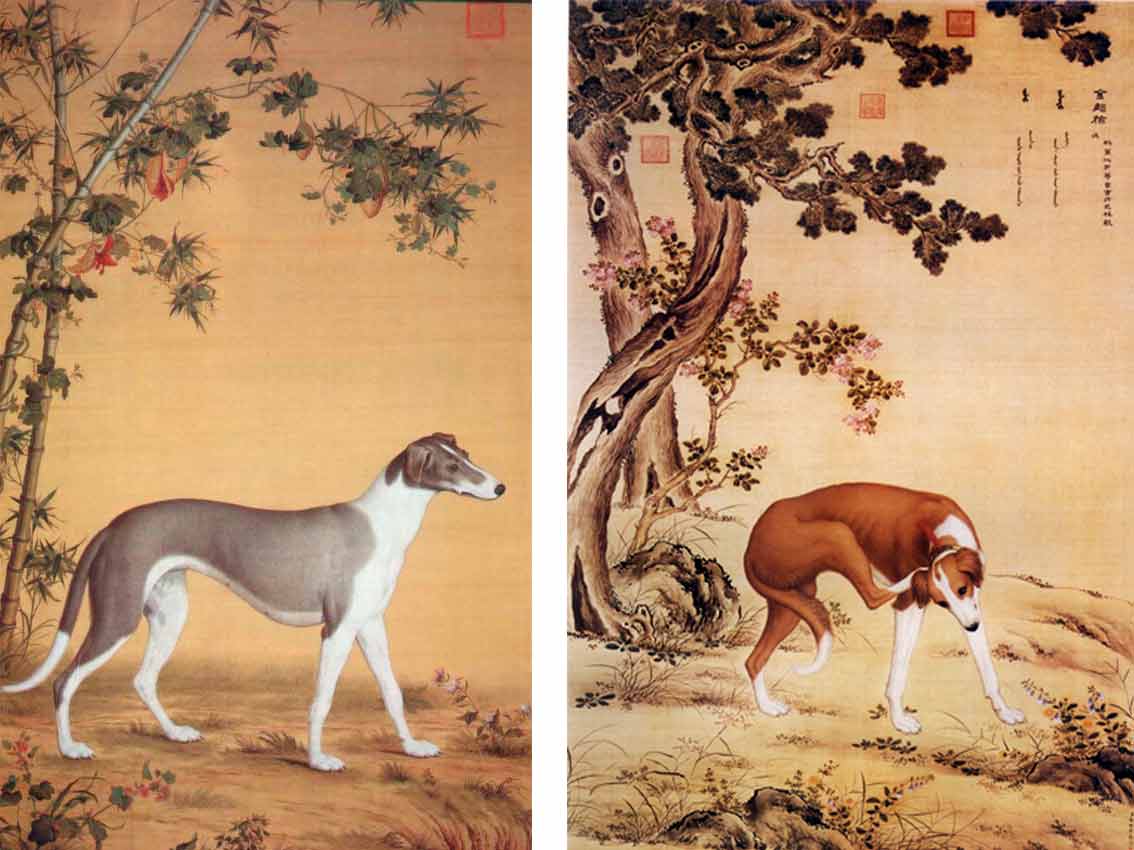
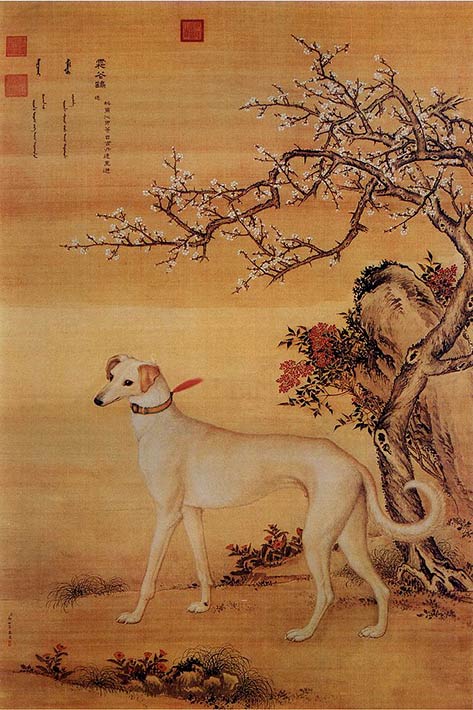 For all this, Castiglione was held in high esteem. And he was allowed to paint animal nature that showed his artistic skills in all their splendor. Then, in 1747, came the great commission. The emperor commissioned him to "portray" 10 "noble" dogs, that is, purebred dogs belonging to royal families. Each of these portraits bears an inscription in Chinese, Manchu, and Mongolian with the dog's name and the owner's name, as a tribute. The series, titled "Ten Fine Hounds," is one of the best series featuring dogs painted in the entire history of art.
The selection of these ten dogs is related to their cultural importance as hunting dogs. As in the Han period (206 BC to 220 AD), an inspector supervised the breeding and training of hunting dogs for the court. And this passion went so far that Han tomb tiles are adorned with images of large, collared dogs, with their bodies slightly crouched, necks extended, and one foreleg bent downwards but raised several inches above the ground. As well as Pekingese, the faithful companions of the Chinese royal family for centuries.
If you want to see more mythical artistic works with ARISTOPETS as protagonists, you can continue reading here. We hope you like them!